Thursday, November 13, 2014

Before the Holidays: Top 10 Ways to Reduce Sugar Intake


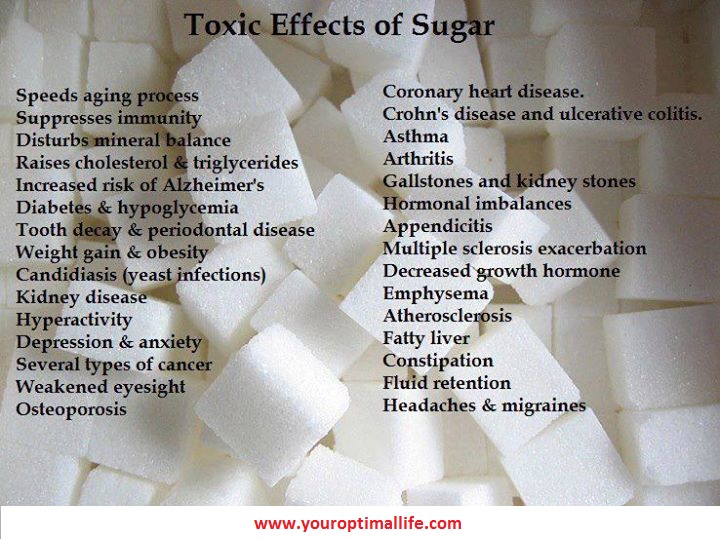
ToxicEffectsofSugar
Ever tried to cut back- or even eliminate- sugar? It’s not so easy.
Nature gave us a sweet tooth for a reason- and it wasn’t just to frustrate our diet efforts!
We humans – unlike other animals- don’t make our own vitamin C. Vitamin C is most abundant in fruits. So nature gave us taste buds that would make these relatively sweet tasting foods desirable.
Unfortunately the whole system has become deregulated since just about everything you buy now has sugar in it, and there’s a huge disconnect between the purpose of our original wiring- to make sure we got enough vitamin C- and the way that wiring is used today (to make sure we get enough Krispy Kreme donuts!)
Giving up- or cutting back- on sugar is no picnic. But the rewards are tremendous. Eliminating (or even reducing) sugar can benefit your health in more ways than you can imagine.
Here’s a list of my Top Ten Ways to Start Reducing Sugar……..
  1. Don’t add it to foods. This is the easiest and most basic way to immediately reduce the amount of sugar you’re eating. Biggest targets: cereal, coffee and tea.
  2. Don’t be fooled by “healthy sugar” disguises. Brown sugar, turbinado sugar, raw sugar … it’s all pretty much the same thing as far as your body is concerned.
  3. Make a real effort to reduce or eliminate processed carbohydrates.Most processed carbs — breads, bagels, most pastas and snacks — are loaded with flour and other ingredients that convert to sugar in the body almost as fast as pure glucose. That sugar gets stored as triglycerides, which is a fancy way of saying fat.
  4. Watch out for “fat-free” snacks. One of the biggest myths is that if a food is fat-free it doesn’t make you fat. Fat-free doesn’t mean calorie-free, and most fat-free snacks are loaded with sugar.
  5. Shop for color. The more your grocery basket looks like a cornucopia of color, the better. It usually means you’re getting more fresh vegetables and low-glycemic fruits such as berries and cherries.
  6. Become a food detective. This tip is from the wonderful author and nutritionist Anne Louise Gittleman, who adds, “To reduce sugar, you have to know where it is first.” Start reading labels.
  7. Beware of artificial sweeteners. Unfortunately, they can increase cravings for sugar and carbohydrates. They can also deplete the body’s stores of chromium, a nutrient crucial for blood-sugar metabolism.
  8. Do the math. Look at the label where it says “total sugars” and divide the number of grams by four. That’s the number of teaspoons of sugar you are ingesting. This exercise alone should scare the pants off you.
  9. Limit fruit. (Notice I didn’t say “eliminate.”) Fruit has sugar, but it also has fiber and good nutrients. Just don’t overdo it. For weight-loss purposes, keep it to two servings a day and try to make most of them low-glycemic (grapefruit, apples, berries)
  10. Eliminate fruit juice. It’s a pure sugar hit with none of the fiber and less of the nutrients that are found in the fruit itself.
                                                                                                        ~Thanks to Ronny Abraham, MD

Monday, November 10, 2014

Protein Deficiency Risks

If your are not eating enough protein, you are not only missing out on the health benefits but may be doing some damage to your overall health. What are some of the affects a lack of protein can have and the main five risks of protein deficiency?
protein deficiency
1. Retaining Fluid
Having enough protein can help balance the fluid in your body. Not taking in enough protein can interfere with keeping this fluid balance and lead to fluid retention. Retaining fluid can lead to the swelling of your stomach, feet and hands and can also lead to discolored skin, stiff joints, high blood pressure and pain.
2. Lack Of Muscle growth
It is well known that one of the main functions of protein is to maintain, repair and build the cells in your body. Having a protein deficiency can stunt the growth of muscle cells as these cells are are one of the main users of protein. With a lack of protein, even after 24 hours, your body begins to break down muscle cells in search of protein, causing muscle waste and shrinkage.
3. Mental Health Issues
Your brain also has requires protein to function at an optimal level. Without sufficient protein, your brain struggles to develop properly. This can lead to such issues as mood swings, anxiety and depression.
4. Possible Organ Failure
Protein plays an important part in the maintenance and repair of all of your body's vital organs. If you do not have enough protein, all your vital organs will not have what they need to stay healthy and function properly. In the short term, this results in organs not functioning at optimum level and possible organ failure in the long term.
5. Immune System Weakness
Protein is used by your immune system to create antibodies. The importance of these antibodies is to strengthen your body's immune system, and to fight disease, infections and viruses.
If you are lacking protein in your diet, your body will not have what is required to make these antibodies. The lack of these antibodies will have a negative effect on your immune system and make you vulnerable to infections, viruses, and diseases.


Summary
Protein deficiency can lead to some serious health problems. It is crucial that your diet contains plenty of protein-rich foods (such as meat, nuts, and fish) and to make it a point to enjoy the health boosting properties of protein.


~Thanks to Mike Medeiros


Sunday, November 9, 2014

The Most Important Healthy Beauty Swap You Can Make


Healthy changes often come as a result of major dedication and discipline—like dawn workouts and ordering kale salad instead of wings & lager. But small, yet powerful changes can boost your wellness as much as big sacrifices can. 
When it comes to staying beautiful, you can do all the right things: use a great cleanser, exfoliate, moisturize. But the beauty cognoscenti say many of us get at least one of those “right” things - well - wrong. And as a result, we’re contributing to our own lack of that healthy glow.
Swap your moisturizers and lotions for a facial oil (think squalane, camellia, argan, coconutpumpkin seed, or blends with jojoba, chamomile, rosehip seed, sea buckthorn, and marula, just to name a few).
Oils provide direct nourishment, make skin more luminous, and help protect skin from a range of freakouts. And they do it sans additives like water, preservatives, and emulsifiers.
If you apply them correctly, of course.
The time to apply oils is as soon as you wash your face or jump out of the shower—you’re not necessarily dripping, but definitely still damp. (You can always mist your face first, too.)
Applying to damp skin is something a lot of us have heard, but we’re still not doing, and it makes a huge difference in boosting your radiance. When there are some beads of water on your skin, apply the oil directly. Done right, it’ll soak into the skin in a minute, not sit on top of it.
You might find you don’t need a moisturizer, except in the more brutal months. During winter, consider the layer method: Apply a few drops of oil first, then a moisturizer, cream, or balm, which can help keep cold (read: harsh) fall and winter air at bay. Of course, if you love your moisturizer—face or body—it’s totally fine to keep using it. It just might not be the beauty workhorse you think it is.If your skin is on the oily or acne-prone side, and you’re skeptical about putting oils anywhere near your face, take note: Plant oils can actually help bring your skin into balance. Use an oil blend higher in linoleic acid, such as rosehip or evening primrose, if your skin type is on the oily side. For dry skin, use oils higher in oleic acid, such as sea buckthorn, squalane or avocado oil.
Oils are great because you’re skipping all the waxy emulsifiers and preservatives that are needed to make an oil into a water-based cream, and really getting the essential skin-care ingredients in their core form.
~Thanks to Spirit Demerson

Wednesday, November 5, 2014

This Is Your Teenager's Brain on Soda


A growing number of doctors and public health experts now see sugar as one of the main culprits behind both widening waistlines and chronic health problems like heart disease and diabetes. But scientists are only just discovering how the sweet substance affects the brain—especially the developing brain. As you might guess, sugar isn't exactly making young people sharper. In fact, researchers at the University of Southern California recently published a study showing a connection between sugar consumption and memory problems.
For the USC study, scientists gave adolescent rats sugar-sweetened drinks that contained either sugar or high-fructose corn syrup in "concentrations comparable to popular sugar-sweetened beverages." They observed the animals' ability to navigate through mazes compared to a control group of rats given plain water. The adolescent rats on sugar "were impaired in learning and remembering the task," says Scott Kanoski, the corresponding author of the study and an assistant professor of biological sciences at USC-Dornsife.
The researchers also found evidence of swelling in the part of the brain called the hippocampus. The swelling appeared in the adolescent rodents who consumed both sugary solutions, although the results were more pronounced for the rats given high-fructose corn syrup (usually the sweetener used in soda). Damage to this part of the brain is often found in people who suffer from Alzheimer's and other forms of dementia.
The results of a memory test conducted. "Effects of Sucrose and High Fructose Corn Syrup Consumption on Spatial Memory Function and Hippocampal Neuroinflammation in Adolescent Rats," Hsu et al.
Kanoski says they did not determine why sugar influences the brain this way, but stressed that there was a clear connection to how it could impact youth. "We know that not only with adolescents, but with all critical period of development, there seems to be a higher susceptibility to environmental influences on behavior and biological systems," he says.
The study came out of a long line of research, headed by Kanoski and others, looking at the negative effects of the Western diet. This diet is high in saturated fats and simple sugars, and rats raised on it don't turn out too well: "They gain weight, they have increased adiposity, impaired glucose tolerance," Kanoski has found. Maybe even more disturbingly, they have "impaired cognitive processes," he says. Since these animals have similar physiological and neurobiological systems as humans, they serve as a reflection of how this diet might be screwing with our health and memories, too.
More than a quarter of teens drink at least a soda a day, and close to a fifth drink two or more.
In Kanoski's study, adult rats were also fed sugary diets and had to go through the mazes, but they didn't suffer the same cognitive defects as adolescents high on sugar. Assuming the results would hold true for people, that means we're feeding the population whose brains are more vulnerable to sugar the most sugary beverages. According to a 2011 National Center for Health Statistics Data Brief, teens and young adults consume more sweetened drinks than any other age groups. A food marketing study published by the Federal Trade Commission in 2012 shows that spending on soda marketing to teens was "higher than any other food category for teen marketing." This publicity appears to be working. The Center for Science in the Public Interest reports that more than a quarter of teens drink at least a soda a day, and close to a fifth drink two or more.
There might still be hope, though. Kanoski's team is now looking into whether sugar's negative affects can be turned around. Although Kanoski says he doesn't have results on this yet, "there have been other studies showing that animals can recover from cognitive deficits." But until stronger evidence of this turnaround arrives, add soda to the list of things you only realize later in life you wish you hadn't indulged so much in as a teen.

Friday, October 31, 2014

Trust And Toxic Relationships


Sometimes the greatest trust we experience is with animals. Unfortunately trust between humans can be hard to come by.
Trust is the basis of any effective and life affirming relationship. So how does trust happen and why is it that so many people including highly sensitive people find that no matter what efforts they make they are not able to get to a positive trusting place with many of their important relationships?
And while we are at it, let’s ask what happens to trust in toxic relationships including narcissistic ones.

Are There Different Kinds Of Trust?

There are different ways that people experience trust; however, trust at its most fundamental level is a feeling of safety. The feelings of safety can come from any number of sources which is one of the reasons that it can be difficult to create between two people.
In what ways is trust created?
  • via similar expectations
  • the same values
  • compatible personal habits
  • comfortably similar 'style'
  • similar background
  • a match in goals and dreams
This is a trust based on sameness, on being alike and it can help for building a foundation in a relationship.
Compatibility makes a big difference in establishing trust but does not help us with the dynamic nature of life which requires listening, paying attention, the ability to compromise and problem solve in mutually positive ways. That is a different and equally necessary component of trust.
Each of these compatibility or relating challenges provide rich opportunities for trust issues and abuse.

Where Does The Toxicity Arise?

Toxicity in relationships usually arises from some form of mishandled difference or incompatibility or some form of exploitation.
Although there is obviously nothing inherently wrong with people being different, differences can be a problem if they are used to make inappropriate demands of others. It is not appropriate to transfer our habits, expectations and lifestyle automatically to another and demand that others conform to our preferences. For example, a person who does not celebrate holidays should not demand that people who like to celebrate them forgo their celebrations or people who dislike one kind of food insist that their friends and family eat like them. These are simplistic examples. Of course context is not being considered here and context does matter.
So how we handle differences and the dynamics of the ups and downs of life can result in toxicity in our relationships.

Domination And Toxic Relationships

The need to dominate someone else is a surefire way to create a toxic relationship and deserves a special mention since it accounts for a lot of the perceived toxicity in relationships. The need to dominate is an important pattern in narcissists because narcissists only feel safe when they have the upper hand. Narcissists, however, are not the only people with a high need to dominate. People who
  • have rigid ideologies
  • are very competitive
  • have fixed ideas about rules and roles to live by
also have a high need to dominate others to perpetuate their worldviews or social position. They can be very toxic for those who do not share their point of view.
Some families have rigid ideological and social views with a dose of narcissism for good measure. They tend to think negatively of people who do not meet their expectations and are very critical and judgmental. Often, their thinking and attitudes did not sit well with other family members and can cause a lot of heartache. There is a reason for this disappointment: people who have these rigid ideas and attitudes have a basic inner negativity that often is not open to change.

Is It Hopeless?

There are indeed people with whom one cannot have a positive relationship, people who will not see you as an equal human being. Fortunately not everyone is like that.
Some describe people as coming in 3 flavors:
  1. the haters or hopelessly negative
  2. the indifferent
  3. your kindred spirits or tribe.
This is a simple but effective reminder that we cannot get along with everyone but there are still plenty of people out there who will make great companions. 33% of the human race is a large number.

What Does A Healthy Relationship Look And Feel Like?

In a healthy relationship, both people are peers and have a say. They respect each other and negotiate how they handle their differences. One person does not set or dominate the agenda. The relationship is actually co-created by the two people. There is a feeling of relief and acceptance that you do not get in a toxic relationship. Cocreating a relationship does not happen in toxic relationships and certainly not in relationships with a narcissist.

Changing Relationship Dynamics

Some relationships in your life will fall in a gray area of sometimes good and other times not so good. They may be worth some attention to see if you can make them better. Work relationships and family relationships can be helped by some creativity.
Here are a number of creative things you can do to change relationship dynamics:
  • enlarge the concerns/agenda to include your concerns and issues
  • change perceptions about pitfalls and risks to change the choices that get made
  • create a compromise strategy: one day is is my way, another day your way and on a different day we try something new
  • attach change to goals and important mutual concerns. By trying “x” we help us to succeed at “y”.
  • move the relationship in a cocreating direction.
Some people cannot handle negotiating and so at best you can work with them on a limited basis, and some simply cannot be in your life.

Assessing Possibilities

Before you get involved with someone, look for these characteristics to assess whether or not you have a potentially non-toxic relationship:
  • flexibility
  • creativity
  • listening skills
  • open, non rejecting language
  • keeps promises and does not promise more than can be done
  • realistic rather than inappropriate expectations
You deserve the care and regard of others. When you are willing to do your part you also deserve people in your life who meet you part way to the best of their ability. Not only is it important to your emotional and mental health to have constructive companions but also for your physical health as well. Stressful relationships are very physically damaging.
Awareness about potential sources of toxicity and a mindful way of appraising individuals can help you find people to be in relationship with who will bring out the best in life for you. Your goodwill and creativity can make the relationship joyful. You deserve no less!
~Thanks to Maria Hill

Why is Iron so Crucial to Your Body?


The human body requires iron to perform many vital physiological functions. For instance, iron is the key component of hemoglobin that allows red blood cells to transport oxygen throughout the body, and it plays a key role in cell growth and differentiation. According to the World Health Organization, up to 80% of the people in the world may be iron deficient. Premenopausal women, particularly those who exercise regularly, face a great risk of iron deficiency, or even anemia. Athletic, active males are also at high risk for iron deficiency. Low levels of iron can leave you feeling physically tired and weak, impair mental function, and weaken the immune system. Having too much iron in the body, on the other hand, can poison certain organs and even cause death. Maintaining the optimal balance of iron within the body is therefore essential to one’s health.

How does the body acquire and expel iron?
The body cannot make iron; you must acquire it through your diet. Dietary iron is processed and absorbed by the mucosal cells of the small intestine. Only about 10% of the iron we consume each day is absorbed into the body, however. The process of iron absorption is tightly regulated because the body does not posses any biochemical mechanisms for removing iron. Instead, iron is lost through processes such as bleeding, menstruation, and breast-feeding. Additionally, iron within the body is constantly being recycled and reused (e.g., in red blood cell turnover).
What happens once iron enters the body?
After being absorbed into the mucosal cells of the small intestine, a portion of the iron is stored in the protein ferritin. Each ferritin molecule is capable of binding to around 4,500 iron molecules at a time. Ferritin binds and releases iron in response to fluctuating amounts of iron in the blood, thereby maintaining a relatively constant serum (blood) iron level. Ferritin is found in all cells, but is most common in bone marrow, the liver, and the spleen. The liver, heart, and pancreas typically have high levels of ferritin and are therefore susceptible to disease or damage from iron overload.
Iron not stored within ferritin is exported from the intestinal cells and released into the bloodstream. Once the iron enters the blood, it is bound by the protein transferrin. Proteins like transferrin prevent iron from forming cell-damaging compounds such as free radicals and aid in the transportation of iron to various tissues throughout the body.
Some iron is also shuttled to the bone marrow where it plays a key role in the formation of new red blood cells. Iron-bound transferrin binds to the transferrin receptor on the surface of newly forming red blood cells, then moves into the cell where the iron is separated from the transferrin. The transferrin protein returns to the bloodstream, and the iron is available in the cell for use. Since red blood cells have such a short lifespan (about 120 days), the body requires a constant supply of iron to rebuild hemoglobin. As a result, dying red blood cells are recycled by white blood cells known as macrophages. Old hemoglobin is broken down to replenish the blood’s iron supply.
Why might my iron be low?
One reason you may be low on iron is that your body’s demand for iron may have increased. This often occurs in young children undergoing rapid growth, pregnant women, and people who lose blood through blood donation, intestinal conditions, menstruation, or very intense endurance activity. Another reason for low iron is decreased iron intake or absorption. The Institute of Medicine of the National Academy of Sciences recommends that men aged 19-50 consume 8 mg of iron per day and premenopausal women consume 18 mg of iron per day. After menopause, women’s iron needs drop to the same level as men’s: 8 mg per day.
How can I improve my body’s iron status?
Dietary iron takes two forms: heme (meat, poultry, and fish) and nonheme (beans, spinach, and fortified foods). Although nonheme iron is the more abundant form, the body more readily absorbs heme iron. Therefore you can increase iron absorption by consuming more heme iron. In addition, vitamin C helps to increase the amount of iron that your body absorbs; consuming foods or beverages rich in vitamin C at the same time that you are eating foods high in iron will boost iron absorption. Other compounds inhibit the absorption of iron, so you should avoid consuming foods or beverages containing these substances at the same time you are eating iron-rich foods. For example, for improved iron absorption, don’t drink coffee or tea during a meal or for one hour following a meal. Similarly, legumes and whole grains contain compounds that reduce iron absorption - so avoid consuming beans or whole grains with an iron-rich meal.
~Thanks to Gil Blander

Blog Archive