Tuesday, April 10, 2012

Spinach Is a Dish Best Served Cooked


If spinach has the reputation of being the homework of vegetables, it was not helped by its ’70s “revival” in the form of raw spinach salads. Spinach has many charms — truly singular flavor, the ability to be transformed by cooking in myriad ways, its famous health benefits — but salad is probably the least convincing.

Mark Bittman

Mark Bittman is The Times Magazine’s food columnist and an Opinion columnist.


Here, spinach undergoes four completely distinct treatments: superfast wilting in a pan; not-much- slower steaming in a pot; braised and almost a full meal; and superslow, a technique I really love, and one that results in astonishingly fine creamed spinach and the like. (These are generally so high-fat that they effectively neutralize spinach’s supposed health benefits, an interesting paradox.)

A few pointers: fresh spinach is a given, but really fresh spinach — dirty spinach, in bundles rather than bags — is preferable, especially if it comes in bunches, still attached to the little pink “crowns” that attach leaves to root. (Eat those; they’re good.) Two pounds is not too much for four people; less than a pound is not enough. (These recipes were tested with one and a half pounds.) Do not forget salt.

In these groups, the wilted and the braised are more likely to make satisfying main dishes; the other two, steamed and superslow, produce dishes that feel like sides, although they’re hardy enough, especially those in the last group. The differences among them are quite stark.

I have left out other options: you can flash-fry spinach, tossing it into a hot wok or pan with a bit of oil and some chilies and garlic; it’s done in seconds. You can also plunge it into boiling water, cool it, squeeze it dry and top with lemon and olive oil or soy sauce and sesame oil.

In short, this isn’t the end of the options. Only when you reach that end should you start messing around with the salads.

WILTED

With Skirt Steak

Sear 8 ounces skirt steak in a large skillet over high heat, turning once. Remove, let pan cool a bit, then add 2 tablespoons butter and chopped spinach; stir until it wilts, 30 seconds or so. Add 3 tablespoons olive oil, 1 tablespoon balsamic vinegar, 2 chopped tomatoes and 1/2 chopped red onion and cook another minute. Toss and top with the sliced steak; 1/2 cup crumbled blue cheese makes a nice garnish.

With Bacon

Render 4 thick bacon slices in olive oil until nearly crisp, then remove. Toss spinach with a sprig of tarragon in the rendered fat to wilt; add 1/2 pound chopped mushrooms instead of tomatoes and onion; skip the cheese and top with bacon.

With Chicken

Substitute chicken breast for steak; cook in olive oil, browning well. Wipe pan clean. Melt 3 tablespoons butter and add spinach to wilt. Add tomatoes and a handful of chopped scallions; skip the rest. Top with sliced chicken and fresh lemon juice.

STEAMED

With Parmesan

Put washed-and-still-wet spinach in a covered pot over medium-high heat. Put 2 to 4 tablespoons butter in a small saucepan over medium heat; stir occasionally until foam subsides and butter turns nut brown. When spinach is tender, after 3 to 5 minutes, drain, drizzle with butter and add 1/2 cup each toasted bread crumbs and shaved Parmesan; toss to combine.

With or Without Anchovies

Toast 2 cloves garlic in the butter, then add 1/2 cup raisins and 2 tablespoons pine nuts. (Anchovy lovers: now’s your chance.) Toss the spinach with this mixture instead of the bread crumbs and cheese.

With Cashews

Use 2 tablespoons sesame oil instead of butter, and stir in 1 chopped green chili. Add 3/4 cup cashews; cook until the cashews brown lightly. Toss with spinach, then add ¼ cup chopped scallions and 2 tablespoons lime juice. Garnish: Lime wedges.

BRAISED

With Eggs

Put 4 tablespoons butter in a large saucepan over medium heat. When it melts, add spinach, one handful at a time, stirring, and sauté until it wilts, about 5 minutes. Form 4 nests in the spinach and crack an egg in each. Cover and cook until egg whites are set, about 4 minutes. Garnish: Shaved Parmesan.

With Mussels

Chop 1 white onion and sauté it in the melted butter; add 3 tablespoons white wine. Cook spinach in this as above, and substitute 1 pound mussels for the eggs; cook until they open. Garnish: Fresh parsley.

With Soy and Ginger

Skip the butter. Put 2 tablespoons sesame oil in a large saucepan, along with 2 cloves minced garlic, 1 tablespoon freshly grated ginger and 1 tablespoon soy sauce. Add spinach and braise until completely wilted and soft, about 10 minutes.

SUPERSLOW-COOKED

With Cream

Melt 2 tablespoons butter in a deep skillet over medium-low heat; add a quarter of the spinach and cook, stirring occasionally, until the spinach has absorbed the butter; then add another tablespoon butter and more spinach and stir; repeat until the spinach is all used. Add 1 cup cream and cook until the cream is thick, at least 15 minutes. Optional: Grated nutmeg to taste.

With Indian Spices

Skip butter; use neutral oil. Sauté 2 onions and 1 clove minced garlic with 1 teaspoon each cumin, coriander and cardamom. Add 1 cup coconut milk, a few tablespoons at a time, alternating with handfuls of spinach. Cook, stirring occasionally, until coconut milk is thick, 1 hour. Add 1/2 cup chickpeas and heat through.

With Rice and Carrots

Put 1/2 pound carrots and 6 cups water in a pan on high heat. Bring to a boil, then add 1/2 cup rice. When it returns to a boil, add spinach and simmer. Cook, stirring, until carrots are tender, 1/2 hour. Add 3 cloves minced garlic and 2 tablespoons butter.

Monday, March 26, 2012

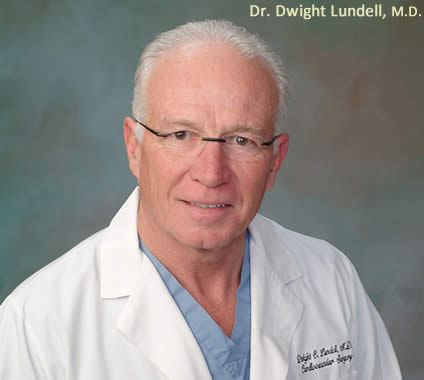
Heart Surgeon Speaks Out On What Really Causes Heart Disease

NB: My mother has been diagnosed with Congestive Heart Failure - I found this article of particular interest!

Dr Lundell
© n/a
We physicians with all our training, knowledge and authority often acquire a rather large ego that tends to make it difficult to admit we are wrong. So, here it is. I freely admit to being wrong. As a heart surgeon with 25 years experience, having performed over 5,000 open-heart surgeries, today is my day to right the wrong with medical and scientific fact.

I trained for many years with other prominent physicians labelled "opinion makers." Bombarded with scientific literature, continually attending education seminars, we opinion makers insisted heart disease resulted from the simple fact of elevated blood cholesterol.

The only accepted therapy was prescribing medications to lower cholesterol and a diet that severely restricted fat intake. The latter of course we insisted would lower cholesterol and heart disease. Deviations from these recommendations were considered heresy and could quite possibly result in malpractice.

It Is Not Working!

These recommendations are no longer scientifically or morally defensible. The discovery a few years ago that inflammation in the artery wall is the real cause of heart disease is slowly leading to a paradigm shift in how heart disease and other chronic ailments will be treated.

The long-established dietary recommendations have created epidemics of obesity and diabetes, the consequences of which dwarf any historical plague in terms of mortality, human suffering and dire economic consequences.

Despite the fact that 25% of the population takes expensive statin medications and despite the fact we have reduced the fat content of our diets, more Americans will die this year of heart disease than ever before.

Statistics from the American Heart Association show that 75 million Americans currently suffer from heart disease, 20 million have diabetes and 57 million have pre-diabetes. These disorders are affecting younger and younger people in greater numbers every year.

Simply stated, without inflammation being present in the body, there is no way that cholesterol would accumulate in the wall of the blood vessel and cause heart disease and strokes. Without inflammation, cholesterol would move freely throughout the body as nature intended. It is inflammation that causes cholesterol to become trapped.

Inflammation is not complicated -- it is quite simply your body's natural defence to a foreign invader such as a bacteria, toxin or virus. The cycle of inflammation is perfect in how it protects your body from these bacterial and viral invaders. However, if we chronically expose the body to injury by toxins or foods the human body was never designed to process,a condition occurs called chronic inflammation. Chronic inflammation is just as harmful as acute inflammation is beneficial.

What thoughtful person would willfully expose himself repeatedly to foods or other substances that are known to cause injury to the body? Well, smokers perhaps, but at least they made that choice willfully.

The rest of us have simply followed the recommended mainstream diet that is low in fat and high in polyunsaturated fats and carbohydrates, not knowing we were causing repeated injury to our blood vessels. This repeated injury creates chronic inflammation leading to heart disease, stroke, diabetes and obesity.

Let me repeat that: The injury and inflammation in our blood vessels is caused by the low fat diet recommended for years by mainstream medicine.

What are the biggest culprits of chronic inflammation? Quite simply, they are the overload of simple, highly processed carbohydrates (sugar, flour and all the products made from them) and the excess consumption of omega-6 vegetable oils like soybean, corn and sunflower that are found in many processed foods.

Take a moment to visualize rubbing a stiff brush repeatedly over soft skin until it becomes quite red and nearly bleeding. you kept this up several times a day, every day for five years. If you could tolerate this painful brushing, you would have a bleeding, swollen infected area that became worse with each repeated injury. This is a good way to visualize the inflammatory process that could be going on in your body right now.

Regardless of where the inflammatory process occurs, externally or internally, it is the same. I have peered inside thousands upon thousands of arteries. A diseased artery looks as if someone took a brush and scrubbed repeatedly against its wall. Several times a day, every day, the foods we eat create small injuries compounding into more injuries, causing the body to respond continuously and appropriately with inflammation.

While we savor the tantalizing taste of a sweet roll, our bodies respond alarmingly as if a foreign invader arrived declaring war. Foods loaded with sugars and simple carbohydrates, or processed with omega-6 oils for long shelf life have been the mainstay of the American diet for six decades. These foods have been slowly poisoning everyone.

How does eating a simple sweet roll create a cascade of inflammation to make you sick?

Imagine spilling syrup on your keyboard and you have a visual of what occurs inside the cell. When we consume simple carbohydrates such as sugar, blood sugar rises rapidly. In response, your pancreas secretes insulin whose primary purpose is to drive sugar into each cell where it is stored for energy. If the cell is full and does not need glucose, it is rejected to avoid extra sugar gumming up the works.

When your full cells reject the extra glucose, blood sugar rises producing more insulin and the glucose converts to stored fat.

What does all this have to do with inflammation? Blood sugar is controlled in a very narrow range. Extra sugar molecules attach to a variety of proteins that in turn injure the blood vessel wall. This repeated injury to the blood vessel wall sets off inflammation. When you spike your blood sugar level several times a day, every day, it is exactly like taking sandpaper to the inside of your delicate blood vessels.

While you may not be able to see it, rest assured it is there. I saw it in over 5,000 surgical patients spanning 25 years who all shared one common denominator -- inflammation in their arteries.

Let's get back to the sweet roll. That innocent looking goody not only contains sugars, it is baked in one of many omega-6 oils such as soybean. Chips and fries are soaked in soybean oil; processed foods are manufactured with omega-6 oils for longer shelf life. While omega-6's are essential -they are part of every cell membrane controlling what goes in and out of the cell -- they must be in the correct balance with omega-3's.

If the balance shifts by consuming excessive omega-6, the cell membrane produces chemicals called cytokines that directly cause inflammation.

Today's mainstream American diet has produced an extreme imbalance of these two fats. The ratio of imbalance ranges from 15:1 to as high as 30:1 in favor of omega-6. That's a tremendous amount of cytokines causing inflammation. In today's food environment, a 3:1 ratio would be optimal and healthy.

To make matters worse, the excess weight you are carrying from eating these foods creates overloaded fat cells that pour out large quantities of pro-inflammatory chemicals that add to the injury caused by having high blood sugar. The process that began with a sweet roll turns into a vicious cycle over time that creates heart disease, high blood pressure, diabetes and finally, Alzheimer's disease, as the inflammatory process continues unabated.

There is no escaping the fact that the more we consume prepared and processed foods, the more we trip the inflammation switch little by little each day. The human body cannot process, nor was it designed to consume, foods packed with sugars and soaked in omega-6 oils.

There is but one answer to quieting inflammation, and that is returning to foods closer to their natural state. To build muscle, eat more protein. Choose carbohydrates that are very complex such as colorful fruits and vegetables. Cut down on or eliminate inflammation- causing omega-6 fats like corn and soybean oil and the processed foods that are made from them.

One tablespoon of corn oil contains 7,280 mg of omega-6; soybean contains 6,940 mg. Instead, use olive oil or butter from grass-fed beef.

Animal fats contain less than 20% omega-6 and are much less likely to cause inflammation than the supposedly healthy oils labelled polyunsaturated. Forget the "science" that has been drummed into your head for decades. The science that saturated fat alone causes heart disease is non-existent. The science that saturated fat raises blood cholesterol is also very weak. Since we now know that cholesterol is not the cause of heart disease, the concern about saturated fat is even more absurd today.

The cholesterol theory led to the no-fat, low-fat recommendations that in turn created the very foods now causing an epidemic of inflammation. Mainstream medicine made a terrible mistake when it advised people to avoid saturated fat in favor of foods high in omega-6 fats. We now have an epidemic of arterial inflammation leading to heart disease and other silent killers.

What you can do is choose whole foods your grandmother served and not those your mom turned to as grocery store aisles filled with manufactured foods. By eliminating inflammatory foods and adding essential nutrients from fresh unprocessed food, you will reverse years of damage in your arteries and throughout your body from consuming the typical American diet.

Tuesday, March 20, 2012

Calories Are Everywhere, Yet Hard to Track

March 19, 2012, 2:57 PM
Yvetta Fedorova

Americans are having a passionate love affair with something they cannot see, hear, feel, touch or taste. That something is calories, billions upon billions of which are consumed every day, often unwittingly, at and between meals.


Enter two experts: Marion Nestle, a professor of nutrition, food studies and public health at New York University; and Malden Nesheim, professor emeritus of nutritional sciences at Cornell University. Together they have written a new book, “Why Calories Count: From Science to Politics,” to be published April 1, which explains what calories are, where they come from, how different sources affect the body, and why it is so easy to consume more of them than most people need to achieve and maintain a healthy weight.

Certainly calories are talked about constantly, and information about them appears with increasing frequency on food labels, menus, recipes and Web sites. But few people understand what they are and how they work — especially how they have worked to create a population in which 64 percent of adults and a third of children are overweight or obese, or how they thwart the efforts of so many people to shed those unwanted pounds and keep them off once and for all.


“The human body does a superb job of making sure that it gets enough calories to meet biological needs but is much less effective at knowing when calories are in excess,” they wrote. “The result is that it is much easier to overeat than to stop eating when you are no longer hungry.”

Out of Control

People living in affluent societies today swim in a sea of redundant calories. Food is everywhere, and it is relatively inexpensive, accounting for about 10 percent of Americans’ disposable income on average, Dr. Nestle said in an interview.

“When did it become O.K. to eat in bookstores?” she asked. “Or in Staples? Bed, Bath and Beyond, or drugstores?”

Portion sizes — especially restaurant portions — have mushroomed out of control, she noted.

“People who pay attention to calorie labels on menus are shocked, for example, to discover that a single cookie contains 700 calories,” Dr. Nestle said. “You may want that cookie, but then you can’t eat anything else. Cookies didn’t used to be this big.”

Nor were bagels, now 500 or 600 calories each, or sodas, available in sizes as large as 64 ounces.

The shock extends to those supposedly in the know. Recently Lisa Young, a colleague of Dr. Nestle at New York University, asked the students in her nutrition class how many calories were in a Double Gulp, a 64-ounce soda available at 7-Eleven convenience stores. She’d already told them that an eight-ounce soda has 100 calories, but the students guessed a Double Gulp contains less than 400 calories.

When Dr. Young asked why their estimate was off by 100 percent, they simply said, “800 calories — that can’t be!”

People who do check calorie information on nutrition labels often fail to note the size of the serving it applies to. A serving of ice cream is just a half-cup, a burger is three ounces, and uncooked pasta is merely two ounces. A pound of pasta, therefore, should feed eight people, not two or four; two ounces per serving is about what Italians consume as a first course.

A typical American restaurant meal is more like dinner for two. Dr. Nestle said restaurants have resisted her suggestion to serve half the amount of food for about a third the price. She recently found at one New York restaurant that a “personal-size pizza” contained 2,100 calories, the amount the average woman needs in a day.

“And that didn’t include the soda and dessert,” she said. “Unless you’re in the kitchen watching what the chef is doing, you have no idea how many calories are being packed into a given dish.”

Health claims for foods are another seductive factor encouraging overconsumption, Dr. Nestle said. She’s found that words imparting “a health aura — like ‘organic’ or ‘low-fat’ or ‘heart-healthy’ — can prompt people to forget about calories.”

Ending Excess

The human body has a very complex and redundant system to make sure the brain gets the sugar calories it needs to function, Dr. Nestle and Dr. Nesheim explain in their book. At least 100 different hormones, enzymes and other chemicals — with more likely to be discovered — act to regulate appetite and to assure that people eat enough to maintain brain function.

But it is these very systems that go into overdrive during starvation (translation: a reduced-calorie diet), making it so difficult for people to lose weight.

As seductive as the current food environment is, it is still easier not to gain excess weight in the first place. Most people seriously underestimate how much they eat. For example, participants in the Nurses’ Health Study report consuming 1,600 calories a day, but their body mass index on average is 26 or higher — well into the overweight range and supported by many more calories than the women seem to think they are eating.

“I don’t count calories, and I don’t recommend counting calories,” Dr. Nestle said. “I recommend eating food. You have to pay attention to eating better and in moderation: plenty of fruits and vegetables, lean meats, and whole grains in reasonable portions, and not too much junk food.”

She applauded the current campaign by the New York City Department of Health and Mental Hygiene to get people to stop “pouring on the calories” by consuming fewer sugar-sweetened soft drinks.

Dr. Nestle and Dr. Nesheim also review the weight-regulating effects of different sources of calories. Is it high-fructose corn syrup that makes so many people fat? Are other carbohydrates to blame, or fat — or what?

They found scant evidence to support the popular notion that any one nutrient is responsible for ourobesity, or that a low-carbohydrate diet is everyone’s secret to success.

Although a diet low in carbs and high in fats and protein may enhance satiety and curb snacking, few people seem able to refrain indefinitely from the carbohydrate-rich foods they love. The long-term effectiveness of low-carb diets for a vast majority of people who try them has yet to be assessed.

“The source of the calories may make a small difference in weight maintenance or loss, but it appears to be much less important than the ability to resist pressures to overeat calories in general,” the authors wrote.

And since most people cannot come close to estimating how many calories they consume or expend in a day, a better way to monitor intake and output, Dr. Nestle said, is to regularly check the notches on one’s belt or numbers on the scale.

“It’s much easier to lose a pound or two than 20 or 30,” she said.

Of course, the amount of calories consumed is not the only factor influencing weight. Calories expended count as well, and the more active people are, even if they are simply fidgety, the better able they are to balance intake with output.

Tuesday, February 14, 2012

Mindful Eating as Food for Thought

Jennifer May for The New York Times

Diners wait until everyone is seated at the Blue Cliff Monastery. More Photos »

TRY this: place a forkful of food in your mouth. It doesn’t matter what the food is, but make it something you love — let’s say it’s that first nibble from three hot, fragrant, perfectly cooked ravioli.

Multimedia
Jennifer May for The New York Times

A road sign shows the way to the monastery.More Photos »

Bill Wingell for The New York Times

Prof. Brian Wansink at the Cornell Food and Brand Lab has studied the psychological causes of binge eating. More Photos »

Gretchen Ertl for The New York Times

Dr. Lilian Cheung of Harvard's School of Public Health is a proponent of mindful eating.More Photos »

Now comes the hard part. Put the fork down. This could be a lot more challenging than you imagine, because that first bite was very good and another immediately beckons. You’re hungry.

Today’s experiment in eating, however, involves becoming aware of that reflexive urge to plow through your meal like Cookie Monster on a shortbread bender. Resist it. Leave the fork on the table. Chew slowly. Stop talking. Tune in to the texture of the pasta, the flavor of the cheese, the bright color of the sauce in the bowl, the aroma of the rising steam.

Continue this way throughout the course of a meal, and you’ll experience the third-eye-opening pleasures and frustrations of a practice known as mindful eating.

The concept has roots in Buddhist teachings. Just as there are forms of meditation that involve sitting, breathing, standing and walking, many Buddhist teachers encourage their students to meditate with food, expanding consciousness by paying close attention to the sensation and purpose of each morsel. In one common exercise, a student is given three raisins, or a tangerine, to spend 10 or 20 minutes gazing at, musing on, holding and patiently masticating.

Lately, though, such experiments of the mouth and mind have begun to seep into a secular arena, from the Harvard School of Public Health to the California campus of Google. In the eyes of some experts, what seems like the simplest of acts — eating slowly and genuinely relishing each bite — could be the remedy for a fast-paced Paula Deen Nation in which an endless parade of new diets never seems to slow a stampede toward obesity.

Mindful eating is not a diet, or about giving up anything at all. It’s about experiencing food more intensely — especially the pleasure of it. You can eat a cheeseburger mindfully, if you wish. You might enjoy it a lot more. Or you might decide, halfway through, that your body has had enough. Or that it really needs some salad.

“This is anti-diet,” said Dr. Jan Chozen Bays, a pediatrician and meditation teacher in Oregon and the author of “Mindful Eating: A Guide to Rediscovering a Healthy and Joyful Relationship with Food.” “I think the fundamental problem is that we go unconscious when we eat.”

The last few years have brought a spate of books, blogs and videos about hyper-conscious eating. A Harvard nutritionist, Dr. Lilian Cheung, has devoted herself to studying its benefits, and is passionately encouraging corporations and health care providers to try it.

At the Food and Brand Lab at Cornell University, Prof. Brian Wansink, the author of “Mindless Eating: Why We Eat More Than We Think,” has conducted scores of experiments on the psychological factors that lead to our bottomless bingeing. A mindful lunch hour recently became part of the schedule at Google, and self-help gurus like Oprah Winfrey and Kathy Freston have become cheerleaders for the practice.

With the annual chow-downs of Thanksgiving, Christmas and Super Bowl Sunday behind us, and Lent coming, it’s worth pondering whether mindful eating is something that the mainstream ought to be, well, more mindful of. Could a discipline pioneered by Buddhist monks and nuns help teach us how to get healthy, relieve stress and shed many of the neuroses that we’ve come to associate with food?

Dr. Cheung is convinced that it can. Last week, she met with team members atHarvard Pilgrim Health Care and asked them to spend quality time with a chocolate-covered almond.

“The rhythm of life is becoming faster and faster, so we really don’t have the same awareness and the same ability to check into ourselves,” said Dr. Cheung, who, with the Vietnamese Buddhist monk Thich Nhat Hanh, co-wrote “Savor: Mindful Eating, Mindful Life.” “That’s why mindful eating is becoming more important. We need to be coming back to ourselves and saying: ‘Does my body need this? Why am I eating this? Is it just because I’m so sad and stressed out?’ ”

The topic has even found its way into culinary circles that tend to be more focused on Rabelaisian excess than monastic restraint. In January, Dr. Michael Finkelstein, a holistic physician who oversees SunRaven, a holistic-living center in Bedford, N.Y., gave a talk about mindful gardening and eating at the smorgasbord-friendly headquarters of the James Beard Foundation in New York City.

“The question isn’t what are the foods to eat, in my mind,” he said in an interview. “Most people have a general sense of what the healthy foods are, but they’re not eating them. What’s on your mind when you’re eating: that’s mindful eating to me.”

A good place to try it is the Blue Cliff Monastery, in Pine Bush, N.Y., a Hudson Valley hamlet. At the serene refuge about 75 miles northwest of Manhattan, curious lay people can join Buddhist brothers and sisters for a free “day of mindfulness” twice a week.

At a gathering in January, visitors watched a videotaped lecture by Thich Nhat Hanh (pronounced tik-nyot-HAHN), who founded this and other monasteries around the world; they strolled methodically around the grounds as part of a walking meditation, then filed into a dining room for lunch.

No one spoke, in keeping with a key principle of mindful eating. The point is simply to eat, as opposed to eating and talking, eating and watching TV, or eating and watching TV and gossiping on the phone while Tweeting and updating one’s Facebook status.

A long buffet table of food awaited, all of it vegan and mindfully prepared by two monks in the kitchen. There was plenty of rice, herbed chickpeas, a soup made with cubes of taro, a stew of fried tofu in tomato sauce.

In silence, people piled their plates with food, added a squirt or two of condiments (eating mindfully doesn’t mean forsaking the hot sauce) and sat down together with eyes closed during a Buddhist prayer for gratitude and moderation.

What followed was captivating and mysterious. Surrounded by a murmur of clinking forks, spoons and chopsticks, the Blue Cliff congregation, or sangha, spent the lunch hour contemplating the enjoyment of spice, crunch, saltiness, warmth, tenderness and like-minded company.

Some were thinking, too, about the origins of the food: the thousands of farmers, truck drivers and laborers whose work had brought it here.

As their jaws moved slowly, their faces took on expressions of deep focus. Every now and then came a pause within the pause: A chime would sound, and, according to the monastery’s custom, all would stop moving and chewing in order to breathe and explore an even deeper level of sensory awareness.

It looked peaceful, but inside some of those heads, a struggle was afoot.

“It’s much more challenging than we would imagine,” said Carolyn Cronin, 64, who lives near the monastery and regularly attends the mindfulness days. “People are used to eating so fast. This is a practice of stopping, and we don’t realize how much we’re not stopping.”

For many people, eating fast means eating more. Mindful eating is meant to nudge us beyond what we’re craving so that we wake up to why we’re craving it and what factors might be stoking the habit of belly-stuffing.

“As we practice this regularly, we become aware that we don’t need to eat as much,” said Phap Khoi, 43, a robed monk who has been stationed at Blue Cliff since it opened in 2007. “Whereas when people just gulp down food, they can eat a lot and not feel full.”

It’s this byproduct of mindful eating — its potential as a psychological barrier to overeating — that has generated excitement among nutritionists like Dr. Cheung.

“Thich Nhat Hanh often talks about our craving being like a crying baby who is trying to draw our attention,” she said. “When the baby cries, the mother cradles the baby to try to calm the baby right away. By acknowledging and embracing our cravings through a few breaths, we can stop our autopilot of reaching out to the pint of ice cream or the bag of chips.”

The average American doesn’t have the luxury of ruminating on the intense tang of sriracha sauce at a monastery. “Most of us are not going to be Buddhist monks,” said Dr. Finkelstein, the holistic physician. “What I’ve learned is that it has to work at home.”

To that end, he and others suggest that people start with a few baby steps. “Don’t be too hard on yourself,” Dr. Cheung said. “You’re not supposed to be able to switch on your mindfulness button and be able to do it 100 percent. It’s a practice you keep working toward.”

Dr. Bays, the pediatrician, has recommendations that can sound like a return to the simple rhythms of Mayberry, if not “Little House on the Prairie.” If it’s impossible to eat mindfully every day, consider planning one special repast a week. Click off the TV. Sit at the table with loved ones.

“How about the first five minutes we eat, we just eat in silence and really enjoy our food?” she said. “It happens step by step.”

Sometimes, even she is too busy to contemplate a chickpea. So there are days when Dr. Bays will take three mindful sips of tea, “and then, O.K., I’ve got to go do my work,” she said. “Anybody can do that. Anywhere.”

Even scarfing down a burrito in the car offers an opportunity for insight. “Mindful eating includes mindless eating,” she said. “ ‘I am aware that I am eating and driving.’ ”

Few places in America are as frantically abuzz with activity as the Google headquarters in Mountain View, Calif., but when Thich Nhat Hanh dropped by for a day of mindfulness in September, hundreds of employees showed up.

Part of the event was devoted to eating thoughtfully in silence, and the practice was so well received that an hourlong wordless vegan lunch is now a monthly observance on the Google campus.

“Interestingly enough, a lot of the participants are the engineers, which pleases us very much,” said Olivia Wu, an executive chef at the company. “I think it quiets the mind. I think there is a real sense of feeling restored so that they can go back to the crazy pace that they came from.”

It’s not often, after all, that those workhorse technicians get to stop and smell the pesto. “Somebody will say, ‘I ate so much less,’ ” Ms. Wu said. “And someone else will say, ‘You know, I never noticed how spicy arugula tastes.’ ”

And that could be the ingredient that helps mindful eating gain traction in mainstream American culture: flavor.

“So many people now have found themselves in an adversarial relationship with food, which is very tragic,” Dr. Bays said. “Eating should be a pleasurable activity.”

Consider These

O.K., so you don’t happen to live in a Buddhist monastery. You can still give mindful eating a spin by incorporating a few chilled-out gestures and rituals into your regular calorie intake.

WHEN YOU EAT, JUST EAT. Unplug the electronica. For now, at least, focus on the food.

CONSIDER SILENCE. Avoiding chatter for 30 minutes might be impossible in some families, especially with young children, but specialists suggest that greenhorns start with short periods of quiet.

TRY IT WEEKLY. Sometimes there’s no way to avoid wolfing down onion rings in your cubicle. But if you set aside one sit-down meal a week as an experiment in mindfulness, the insights may influence everything else you do.

PLANT A GARDEN, AND COOK. Anything that reconnects you with the process of creating food will magnify your mindfulness.

CHEW PATIENTLY. It’s not easy, but try to slow down, aiming for 25 to 30 chews for each mouthful.

USE FLOWERS AND CANDLES. Put them on the table before dinner. Rituals that create a serene environment help foster what one advocate calls “that moment of gratitude.”

FIND A BUDDHIST CONGREGATION where the members invite people in for a day of mindfulness. For New Yorkers, it’s an easy drive to the Blue Cliff Monastery, about 90 minutes north of the city: bluecliffmonastery.org/ on the Web.


Tuesday, January 24, 2012

Tuna, Chickpeas and Broccoli Salad With Yogurt Dressing


This is inspired by one of my favorite Italian combinations, tuna and beans. It’s a salad that keeps well in the refrigerator and one that I love to have on hand. The broccoli will not retain its pretty green color once in contact with the acid in the dressing, so for best results keep the broccoli separate, along with a tablespoon of the dressing. Just before you want to eat, toss in the broccoli and extra dressing; or eat the broccoli separately with the dressing.

1 can water-packed light tuna, drained

1/2 can chickpeas, (3/4 cup) drained and rinsed

1 stalk celery, cut in small (1/4-inch) dice

1/2 red bell pepper, cut in small (1/4-inch) dice

2 tablespoons chopped fresh parsley (optional)

1 tablespoon chopped fresh chives (optional)

1 broccoli crown, steamed for 4 to 5 minutes and broken into florets

1 1/2 tablespoons fresh lemon juice

1/2 tablespoon vinegar (red wine, sherry or white wine)

Salt to taste

1 teaspoon Dijon mustard

1 tablespoon extra virgin olive oil

1/4 cup plain low-fat yogurt

1. In a medium bowl, mix together the tuna, chickpeas, celery, bell pepper, parsley and chives. Keep the broccoli separate.

2. In a small bowl or measuring cup, mix together the lemon juice, vinegar, salt, and Dijon mustard. Whisk in the olive oil and yogurt, and toss with the tuna and chickpea mixture. Refrigerate in a bowl or in containers until ready to take to work or eat. Add the broccoli just before serving.

Yield: 2 1/2 servings.

Advance preparation: This keeps for 3 or 4 days in the refrigerator.

Nutritional information per serving: 240 calories; 1 gram saturated fat; 1 gram polyunsaturated fat; 4 grams monounsaturated fat; 22 milligrams cholesterol; 19 grams carbohydrates; 5 grams dietary fiber; 492 milligrams sodium (does not include salt to taste); 24 grams protein

Tuesday, January 17, 2012

Omelets: The Ultimate Fast Food

Andrew Scrivani for The New York Times

Two Egg Omelets

For some time now the medical literature has been countering the myth that the cholesterol in eggs goes straight to the arteries and that eggs should be shunned by anybody committed to healthy eating. Studies have shown that only a small amount of dietary cholesterol passes into the blood and that saturated fats and trans fats have much bigger effects on cholesterol levels. In fact, according to the Harvard School of Public Health, the only large study that looked at the effect of egg consumption on heart disease found no correlation between the two, except among people with diabetes, who were a bit more likely to develop heart disease if they ate an egg a day.

That’s great news, because eggs are an excellent and delicious source of nutrients, rated by some nutritionists as the gold standard for protein, as one egg has only 75 calories but 7 grams of protein. They are also a great source of the carotenoids lutein and zeaxanthin, which have been associated with protection against vision loss. It’s also great news because eggs cook quickly. Make an omelet if you need a quick, utterly satisfying meal. Omelets are my response to people who tell me that they’d like to eat a healthier diet but that it’s too time-consuming. In addition to the fillings in this week’s recipes, think of using up leftovers or little hunks of cheese that are lingering in your refrigerator, or search through your pantry for something that looks delicious.


Beet Green and Feta Omelet

At this time of year I don’t let a week go by without buying beets at the farmers’ market. I cook up the greens when I get home so that I can make meals like this one in minutes.

For each omelet:

1/3 cup chopped blanched or steamed beet greens (about 1 ounce; see below)

1 garlic clove, minced

1/2 teaspoon red wine vinegar or sherry vinegar

Salt and freshly ground pepper

2 eggs

2 to 3 teaspoons low-fat milk

2 teaspoons extra virgin olive oil

1/2 ounce feta cheese, crumbled

1. In a bowl, toss the chopped blanched beet greens with the garlic, vinegar and salt and pepper to taste.

2. Break the eggs into another bowl and beat with a fork or a whisk until eggs are frothy. Whisk in salt and pepper to taste and 2 to 3 teaspoons milk.

3. Heat an 8-inch nonstick omelet pan over medium-high heat. Add 2 teaspoons olive oil. Hold your hand an inch or two above the pan, and when it feels hot, pour the eggs into the middle of the pan, scraping every last bit into the pan with a rubber spatula. Swirl the pan to distribute the eggs evenly over the surface. Shake the pan gently, tilting it slightly with one hand while lifting up the edges of the omelet with the spatula in your other hand, to let the eggs run underneath during the first minute or two of cooking.

4. As soon as the eggs are set on the bottom, sprinkle the beet greens over the middle of the egg “pancake” and top with the feta. Next, jerk the pan quickly away from you then back toward you so that the omelet folds over onto itself. If you don’t like your omelet runny in the middle (I do), jerk the pan again so that the omelet folds over once more. Cook for a minute or two longer. Tilt the pan and roll the omelet out onto a plate.

Another way to make a 2-egg omelet is to flip it over before adding the filling. Do this with the same motion, jerking the pan quickly away from you and then back toward you, but lift your hand slightly as you begin to jerk the pan back toward you. The omelet will flip over onto the other side, like a pancake. Place the filling in the middle. Use your spatula to fold one side over, then the other side, and roll the omelet out of the pan.

To blanch beet greens: Bring a pot of water to a boil while you wash and stem the beet greens. Rinse in 2 changes of water to rid the leaves of sand. When the water comes to a boil, salt generously and add the greens. Blanch for 1 to 2 minutes, until just tender, and transfer to a bowl of cold water. Drain, squeeze out excess water, and chop. To steam the greens, place them in a steamer basket above 1 inch of boiling water. Cover and steam for 2 minutes or until wilted. Rinse and squeeze out excess water.

Yield: Serves 1

Advance preparation: The blanched beet greens will keep for 4 to 5 days in a covered bowl in the refrigerator.

Nutritional information per serving: 275 calories; 7 grams saturated fat; 3 grams polyunsaturated fat; 11 grams monounsaturated fat; 385 milligrams cholesterol; 4 grams carbohydrates; 1 gram dietary fiber; 369 milligrams sodium (does not include salt to taste); 16 grams protein.


Wednesday, January 11, 2012

Chia seeds

This Superfood is Finally Catching On!!

Remember the Chia Pet? The kitschy little animal-shaped clay planter that, with minimal care, sprouted a green mop in a matter of days?

That 1980s home-gardening fad hasn’t quite faded; you can now purchase a bust of Obama that will grow a verdant ‘do. But chia seeds have spilled from the kitchen windowsill onto our dining plates. They’re the latest superfood health fad, turning up in everything from bread to granola to bottled beverages.

Part of the mint family, chia (Salvia hispanica) is native to central and southern Mexico and Guatemala. Though it’s an annual herb that still grows in its native region (as well as areas of the U.S.), the plant is more widely known commercially for its seeds.
chia seeds
Chia seeds (with a clementine for scale) are multicolored.

Smooth, tiny, and oval in shape, chia seeds are flecked with gray, white, black, and brown. They can be purchased in bulk in select stores, in packages, or online. Best of all, due to their natural antioxidants, they keep for months.

Like flax seeds and salmon, chia seeds are rich in beneficial omega-3 fatty acids. But unlike flax seeds, chia seeds need not be ground to make their omega benefits available to the body. According to health guru Dr. Andrew Weil, chia seeds also provide fiber, calcium, phosphorus, magnesium, manganese, copper, iron, molybdenum, niacin, and zinc. Some believe that chia seeds can help you lose weight or fend off heart disease, but so far, no scientific study has produced evidence to back up these claims.

Endurance junkies are already familiar with the seeds, extolled in Christopher McDougall’s popular 2009 book Born to Run. The ancient Aztecs, McDougall writes, chomped the seeds as they went into battle, and the Hopis used it to fuel epic runs from Arizona to the Pacific Ocean.

chia seeds in pudding and yogurt
Chia seeds can be added to puddings and scattered over yogurt.

McDougall’s account of the Tarahumara tribein northern Mexico includes a passage that makes chia seeds look like native PowerBars. After drinking a mixture of chia seeds dissolved in water with a little sugar and a squirt of lime — as taught to him by the tribe — McDougall reports that it “went down like fruit punch with a nice limey tang . . . within minutes, I felt fantastic.”

When mixed with water, chia seeds turn gelatinous, making them ideal for achieving thicker consistencies in smoothies and vegan puddings. (The January issue of Martha Stewart Living features a vanilla chia pudding, describing it as similar to tapioca in texture.) Their nutty but subtle flavor is a tasty addition to oatmeal and granola, bread dough and muffin batter; they add crunch to salads and yogurt. There’s also the traditional South American beverage known as chia fresca, in which the seeds are mixed with water, lime or lemon juice, and sugar.

If you’ve been a fan of flax seeds but frustrated by their weaknesses — the oily taste, the tendency to spoil quickly, the need to be ground into flour or pressed into oil — then try chia seeds instead. You’ll be pleasantly surprised.


Chia Seed Pudding

Ingredients
2Tbsp. cocoa powder
2Tbsp. honey
8Tbsp. chia seeds
1cup peeled and cubed papaya
2Tbsp. organic coconut oil
2cups water or fruit juice

Procedure

  1. Put all the ingredients in a food processor. Process for 3 minutes, stopping to scrape down the sides of the bowl. Adjust the honey and cocoa powder to taste.
  2. Pour into individual serving bowls and chill. Serve cold.
chocolate chia seed pudding

Blog Archive