Monday, December 29, 2014

Truvia: Truly Natural or Truly Awful?

Here we go again. There’s not a veteran in the natural foods industry that did not see this coming. For years, maybe even decades, we lobbied, petitioned, begged and pleaded for the FDA to classify stevia as GRAS (generally regarded as safe) so it could be incorporated into natural food products as what it is…a natural herb that is naturally sweet with no calories…nature’s perfect answer to having your cake and eating it.
The answer was no…repeatedly no.
But along comes Pepsi and within weeks of their petition, suddenly, stevia is GRAS (generally recognized as safe). You see, Pepsi had discovered that 35% of Americans were growing less inclined to drink diet soft drinks with all the side effects associated with artificial sweeteners.
HEALTH MONSTER
So what’s my beef, you ask?
Well, now that stevia has the status of being safe for humans to consume, things could be changing. Just the other day, without admitting any wrongdoing, Cargill has agreed to pay up to $6.1 million in settlement damages…and modify the labels of their no-calorie, natural sweetener, Truvia.

How Truvia Came to Be

To catch you up, Cargill, one of the leading producers in the industry tied to meat production and a host of GMO corn and soy products, released Truvia back when stevia first became a popular sweetener. After America learned artificial sweeteners were a no-go, we began looking for other options and found stevia, the natural herb from South America that’s been linked to better blood sugar control, promoting alkalinity, and yes, tasting almost 300 times sweeter than sugar, while having no calories or causing a rise in the glycemic index. So obviously, food markers (such as Cargill) were all over the new stevia craze and began marketing their sweetener known as Truvia (containing very little stevia) as a healthy sweetener for consumers.

The Low Down on Truvia’s True Sweetness

The plaintiffs in the recent Truvia law suit alleged that Cargill misled consumers by advertising Truvia as natural (and charging more for its sugar-alternative competitors) when, the suit says, Truvia is largely synthetic and produced chemically.
Now Cargill says they stand by their labels and contend that Truvia is “made from natural ingredients and the labeling meets all applicable legal and regulatory guidelines.”
What’s really going on here? In my opinion, consumers are stepping up and saying ‘enough!’ They are taking a stand that saying something is natural doesn’t make it so and truth is labeling is essential to deciding what foods we want to eat.

What’s Really In Truvia: What They Won’t Tell You

Here’s how Truvia is made. Cargill, a company that “provides food, agricultural, financial and industrial products and services to the world” in Wayzata, MN isolates Rebaudioside A, a steviol glycoside, from the rest of the stevia plant in the production of Truvia, which they have sold since 2008. The lawsuit contends that since ethanol, methanol or rubbing alcohol are all used in a patented, multi-step process to purify Reb A, Truvia should not be considered natural.
Ya’ think?
The lawsuit also pointed out that Reb A comprises only 1% of Truvia. The main ingredient by weight is erythritol, a bulking agent that typically comes from GMO sources unless the product specifically states it is certified non-GMO (which Truvia is not). Of course, according to Cargill, erythritol is a sugar alcohol found naturally in various fruits such as grapes and melons.
Which is true…but the erythritol used in Truvia might not be so natural. Based on U.S. Patent No. 0037266, which involves the production of erythritol crystals, in the process, starch is extracted chemically from bioengineered corn and then converted to glucose through the biochemical process of enzymatic hydrolysis. (Say that three times fast…) The glucose is fermented through the use of moniliella pollinis, a yeast. The fermentation broth is sterilized, filtered and purified to produce erythritol crystals.
Oh, and I should point out that since the starch is extracted from the corn, it is not considered to be genetically modified anymore so you could be consuming an ingredient from GMO corn and not know it because they do not have an obligation to tell you.  But that loophole still allows Cargill to meet labeling regulations.
According to the FDA, it’s hard to define a food or food product as ‘natural’ because it likely has been processed and is no longer a product of the earth unless it’s a whole food without any ingredients. The FDA has not developed a definition for use of the term ‘natural’ or anything similar. However…and this is important: The agency has not objected to the use of the term if the food in question doesn’t contain added color, artificial flavors, or synthetic substances. That leaves a lot of room.
In the end, stevia is a great natural, no-calorie sweetener and erythritol, when processed in a non-GMO fashion naturally works well in combination with this sweet herb to create a delicious flavor and allow people to have sweet taste without compromise to health.

What Are Cargill’s True Intentions With Truvia?

Should Cargill be on the hook and accused of pulling the wool over consumers’ eyes just because they are Cargill? As a company that produces everything from animal feed, energy, metals, additives, industrial and bio-industrial products, pharmaceuticals, personal care products, financial and risk management, food service…and food and beverage ingredients, I have to wonder. We all should wonder. What is their commitment to creating natural foods and ingredients that serve humanity?
For-profit companies have the responsibility to make a profit, to serve their shareholders and fatten their bottom line. It’s not their responsibility to create human health (although they should share in the creation of collective health…since it is also their health on the line).

It’s Up To Us To Decide

That responsibility falls squarely on our own shoulders and we must make choices that reflect an understanding of the impact of those choices have on our personal well-being, on our collective health and on the health of the planet. Stick with STEVIA, the pure and natural substance, to be sure! 
~Thanks to One Green Planet

Saturday, December 20, 2014

Exercise Changes Our DNA

We all know that exercise can make us fitter and reduce our risk for illnesses such as diabetes and heart disease. But just how, from start to finish, a run or a bike ride might translate into a healthier life has remained baffling.
Now new research reports that the answer may lie, in part, in our DNA. Exercise, a new study finds, changes the shape and functioning of our genes, an important stop on the way to improved health and fitness.
The human genome is astonishingly complex and dynamic, with genes constantly turning on or off, depending on what biochemical signals they receive from the body. When genes are turned on, they express proteins that prompt physiological responses elsewhere in the body.
Scientists know that certain genes become active or quieter as a result of exercise. But they hadn’t understood how those genes know how to respond to exercise.
Credit
Enter epigenetics, a process by which the operation of genes is changed, but not the DNA itself. Epigenetic changes occur on the outside of the gene, mainly through a process called methylation. In methylation, clusters of atoms, called methyl groups, attach to the outside of a gene like microscopic mollusks and make the gene more or less able to receive and respond to biochemical signals from the body.
Scientists know that methylation patterns change in response to lifestyle. Eating certain diets or being exposed to pollutants, for instance, can change methylation patterns on some of the genes in our DNA and affect what proteins those genes express. Depending on which genes are involved, it may also affect our health and risk for disease.
Far less has been known about exercise and methylation. A few small studies have found that a single bout of exercise leads to immediate changes in the methylation patterns of certain genes in muscle cells. But whether longer-term, regular physical training affects methylation, or how it does, has been unclear.
So for a study published this month in Epigenetics, scientists at the Karolinska Institute in Stockholm recruited 23 young and healthy men and women, brought them to the lab for a series of physical performance and medical tests, including a muscle biopsy, and then asked them to exercise half of their lower bodies for three months.
One of the obstacles in the past to precisely studying epigenetic changes has been that so many aspects of our lives affect our methylation patterns, making it difficult to isolate the effects of exercise from those of diet or other behaviors.
The Karolinska scientists overturned that obstacle by the simple expedient of having their volunteers bicycle using only one leg, leaving the other unexercised. In effect, each person became his or her own control group. Both legs would undergo methylation patterns influenced by his or her entire life; but only the pedaling leg would show changes related to exercise.
The volunteers pedaled one-legged at a moderate pace for 45 minutes, four times per week for three months. Then the scientists repeated the muscle biopsies and other tests with each volunteer.
Not surprisingly, the volunteers’ exercised leg was more powerful now than the other, showing that the exercise had resulted in physical improvements.
But the changes within the muscle cells’ DNA were more intriguing. Using sophisticated genomic analysis, the researchers determined that more than 5,000 sites on the genome of muscle cells from the exercised leg now featured new methylation patterns. Some showed more methyl groups; some fewer. But the changes were significant and not found in the unexercised leg.
Interestingly, many of the methylation changes were on portions of the genome known as enhancers that can amplify the expression of proteins by genes. And gene expression was noticeably increased or changed in thousands of the muscle-cell genes that the researchers studied.
Most of the genes in question are known to play a role in energy metabolism, insulin response and inflammation within muscles. In other words, they affect how healthy and fit our muscles — and bodies — become.
They were not changed in the unexercised leg.
The upshot is that scientists now better understand one more step in the complicated, multifaceted processes that make exercise so good for us.
Many mysteries still remain, though, said Malene Lindholm, a graduate student at the Karolinska Institute, who led the study. It’s unknown, for example, whether the genetic changes she and her colleagues observed would linger if someone quits exercising and how different amounts or different types of exercise might affect methylation patterns and gene expression. She and her colleagues hope to examine those questions in future studies.
But the message of this study is unambiguous. “Through endurance training — a lifestyle change that is easily available for most people and doesn’t cost much money,” Ms. Lindholm said, “we can induce changes that affect how we use our genes and, through that, get healthier and more functional muscles that ultimately improve our quality of life.”
~Thanks to Gretchen Reynolds, NYT

Wednesday, December 10, 2014

IBS: Can the Paleo Diet Help?

Irritable Bowel Syndrome or IBS is a common gut disorder that can cause much havoc and distress in your body.  Symptoms tend to come and go and vary with each person. Living a green lifestyle and naturally can help you find relief and keep you on the road to health.
Most common symptoms include bloating, gas, and abdominal pain, diarrhea and/or constipation. Physicians call IBS a functional disorder while scientists have yet to discover an exact origin for its cause, making it difficult to diagnose and to treat.

Living a healthy lifestyle can help heal and relieve symptoms of IBS that includes:
  • Exercising regularly
  • Choosing healthy, natural real foods, organic foods,
  • Eat regular meals and avoid missing meals
  • Take time to eat and chew your food thoroughly
  • Drink plenty of filtered water
  • Stay away from processed and refined foods

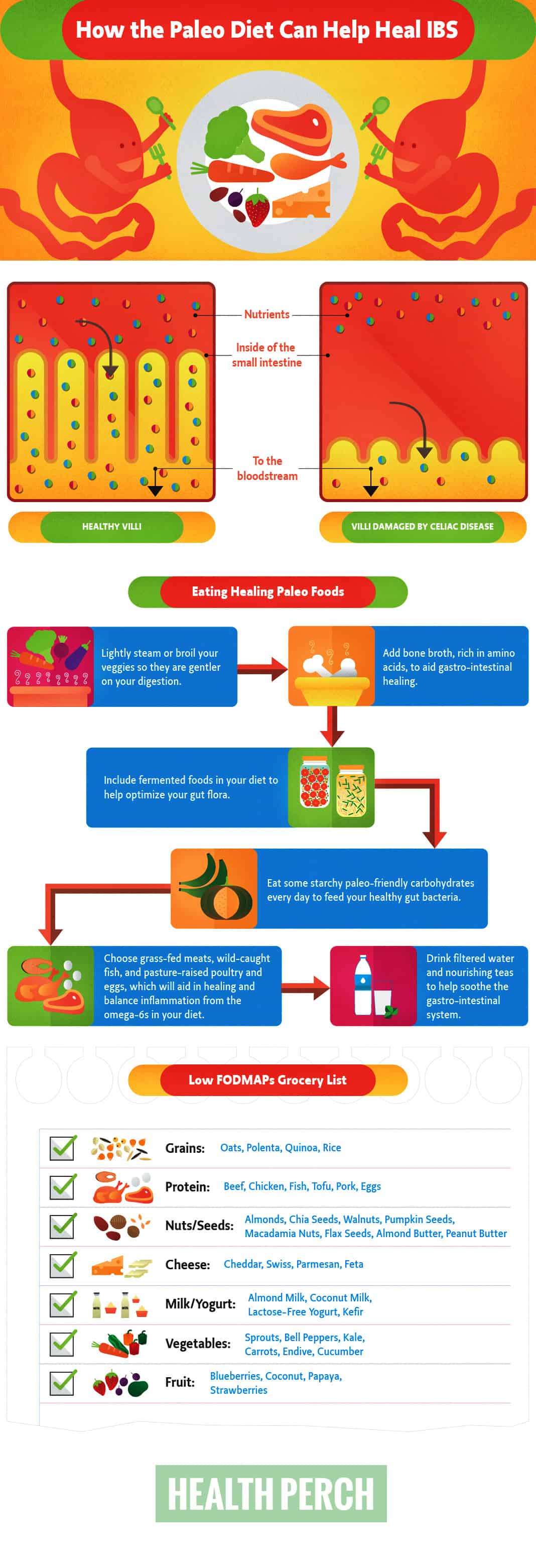
All of these healthy choices can help ease the distress of IBS and help keep the body healthy and strong Yet, sometimes IBS seems to be like a monster lurking in the dark shadows causing pain and misery.  Many sufferers have found that the Paleo Diet helps alleviate a number of IBS symptoms because it aims to maximize both nutrient density and absorption. This regime  eliminates all processed and refined foods. The Paleo diet can benefit IBS sufferers, as it removes most of the food groups that trigger the disorder. It also helps reduce overall inflammation in the body by optimizing fatty acid balance. It helps you heal naturally and in harmony with nature.
Even though it is hard to find a single cause for IBS, there are a few things sufferers have in common:
  • Higher than normal levels of gastro intestinal inflammation
  • Food intolerances to both gluten and diary
  • Imbalance of gut flora (the healthy bacteria in our stomachs): IBS patients have more bad bacteria than good.
The Paleo diet eliminates all grains which contain gluten and/or lectins, both of which can be harmful to our stomachs and cause digestive distress.
Take a look at the infograhic below and see how you can help heal IBS with the Paleo Diet!


~Thanks to Maria Gates

Tuesday, December 9, 2014

Health Benefits of Baking Soda

Baking soda, also known as sodium bicarbonate, has been used for centuries to help treat various ailments. Ancient Egyptians used to lick rocks in order to quell digestive pains, it sounds crazy, but the natural sodium bicarbonate found on the rocks worked like a charm!
The body naturally produces a small amount of sodium bicarbonate each day in order to neutralize stomach acids post digestion. This very same principle is the reason it is a common denominator among commercially available antacids.

Health & Beauty Benefits of Baking Soda

There are countless uses for sodium bicarbonate, from cleaning to deodorizing, it is truly one of the most versatile and underused natural products.

Beauty Benefits of Sodium Bicarbonate

Dry Shampoo

Instead of spending money on expensive dry shampoo’s, try this cheaper, natural alternative. Just sprinkle a small amount of baking soda on the scalp and gently massage in. It works just like commercially available dry shampoo’s at a fraction of the cost!
baking-soda-shampoo-benefits

Volumizing Shampoo

Add a quarter teaspoon of baking soda to your shampoo each day for added volume and cleansing. This will help keep your hair and scalp clean and debris free. It also helps to balance the pH of your scalp, relieving itching, flaking and dryness.

Whiten Teeth

Baking soda is an age old tooth whitener and mouth cleanser. Add a pinch to your toothbrush along with your favorite toothpaste to brighten your teeth and neutralize mouth odors throughout the day.
You can also add a teaspoon of baking soda to water and use it as a mouthwash to freshen your mouth after a meal.

Treat Acne

Using baking soda in facial cleaners can help to relieve acne, reducing redness and pain while preventing further outbreaks. Simply mix together a paste of baking soda and honey, use as a facial mask and rinse off after 15-20 minutes.

Facial Scrubbaking-soda-beauty-benefits

Mixing a paste of baking soda and water and using it as a facial scrub does wonders for the skin. Helping to exfoliate the dead skin and leave your face feeling touchably soft and clean. Add lemon juice and lavender oil for your own special concoction.

Nail Cleanser

Yellowing nails are a problem many of us face and they can be quite stubborn to get rid of. Leaving nail polish on too long can discolor the nail and harsh chemicals are not always the best bet. Instead mix together 3 parts baking soda to 1 part water and scrub the nail gently, this will help reduce discoloration and improve nail health.

Pedicure

Quit turning down foot massages because you are embarrassed of your rough feet. Soak your feet in warm water with a touch of white vinegar, then make a paste with baking soda and water to gently exfoliate your feet. This will help soften and cleanse your feet, so you won’t need to turn down a foot massage again!

Natural Deodorant

There are many recipes for natural deodorant alternatives using baking soda. From a simple paste with water and baking soda to complex recipes incorporating coconut oil, tea tree and lavender. Baking soda deodorizes and cleanses, leaving your underarm feeling great and smelling clean.

Bath Bomb for Itching and Sunburn Relief

Throw a half cup of baking soda in your next bath. It will help relieve itching and pain if you have psoriasis, sunburn or dry skin, but you don’t need to have skin troubles to benefit from this fantastic natural bath bomb.

Health Benefits of Sodium Bicarbonate

baking-soda-for-indigestion-and-heartburn

Heartburn & Indigestion

As mentioned at the beginning of the article, one common denominator among most over the counter antacids, they contain sodium bicarbonate. It is really quite astonishing how well and how quickly baking soda can relieve heartburn and indigestion.
Mix half a teaspoon of baking soda into water until completely dissolved. Drink it down (no it doesn’t taste very good) and you will have near instant relief. The baking soda neutralizes the painful acid causing the discomfort.

Kidney Function

When our kidneys are not functioning properly, they have trouble reducing acidity levels in the body. Highly acidic body’s are prone to ailments and manifest disease rapidly.
One study looked at the benefits of ingesting sodium bicarbonate daily to help treat metabolic acidosis in patients with hypertensive kidney disease. The results were quite promising, showing a notable reduction in kidney injury and improvement in metabolic acidosis.

Cancer

While more scientific studies are needed to assess the true benefits of sodium bicarbonate for the treatment of cancerous tumors, initial tests seem quite promising.
Dietary measures to improve sodium bicarbonate levels have been shown to increase the pH levels of acidic tumors without impacting the pH levels of the blood and healthy tissue. Animal studies have shown that taking sodium bicarbonate orally helps make tumors more alkaline, inhibiting metastasis.

sodium-bicarbonate-for-athletic-performance

Delay Muscle Fatigue

Further studies need to be done to fully determine the efficacy of sodium bicarbonate for delaying muscle fatigue, many experts agree it can help during bouts of physical activity. By orally ingesting sodium bicarbonate prior to working out, it is thought that you can help counteract the effects of lactic acid buildup in the muscles. This helps to delay muscle fatigue and allow for increased physical performance.

Treat Bug Bites

Baking soda has a profound soothing effect on the skin. By mixing a thick paste of baking soda and water you can help reduce the pain, redness and itching associated with a myriad of bug and insect bites.

Cold & Flu Treatment

Some experts believe that you can dramatically reduce the lifespan of the common cold and influenza virus by ingesting sodium bicarbonate regularly. How exactly this works is still relatively unknown, but it is believed to be able to eliminate symptoms in as little as 36 hours.

Ulcer Pain Relief

Ulcer pain is exacerbated by stomach acid. Taking sodium bicarbonate orally will neutralize the harsh acids and provide immediate pain relief. This doesn’t only relieve pain, it helps prevent further damage to the stomach lining caused by excess acidity.

8 Qualities That Make Great Bosses Unforgettable

I remember all of my bosses. Some were bad. Some were good.
But only one was, in the best possible way, truly memorable.
Unforgettable bosses possess qualities that may not show up on paper but always show up where it matters most -- in the minds and even hearts of the people they lead.
Here are some of the qualities of truly unforgettable bosses:
1. They believe the unbelievable.
Most people try to achieve the achievable; that’s why most goals and targets are incremental rather than inconceivable.
Memorable bosses expect more -- from themselves and from others. Then they show you how to get there. And they bring you along for what turns out to be an unbelievable ride.
2. They see opportunity in instability and uncertainty.
Unexpected problems, unforeseen roadblocks, major crises... most bosses take down the sails, batten the hatches, and hope to wait out the storm.
A few see a crisis as an opportunity. They know it’s extremely difficult to make major changes, even necessary ones, when things are going relatively smoothly.
They know reorganizing an entire sales team is accepted more easily when a major customer goes under. They know creating new sales channels is a lot easier when a major competitor enters the market. They know reorganizing manufacturing operations is a lot easier when the flow of supplies and components gets disrupted.
Memorable bosses see instability and uncertainty not as a barrier but as an enabler. They reorganize, reshape, and re-engineer to reassure, motivate, and inspire -- and in the process make the organization much stronger.
3. They wear their emotions on their sleeves.
Good bosses are professional.
Memorable bosses are highly professional and yet also openly human. They show sincere excitement when things go well. They show sincere appreciation for hard work and extra effort. They show sincere disappointment -- not in others, but in themselves. They celebrate, they empathize, they worry. Sometimes they even get frustrated or angry. 
In short, they’re human. And, unlike many bosses, they act as if they know it.
Professionalism is admirable. Professionalism -- with a healthy blend of humanity -- is inspiring.
4. They protect others from the bus.
Terrible bosses throw their employees under the bus.
Good bosses never throw their employees under the bus.
Memorable bosses see the bus coming and pull their employees out of the way often without the employee knowing until much, much later... if ever, because memorable bosses never try to take credit.
And if they can't, they take the hit. (And later speak privately to the employee in question.)
5. They’ve been there, done that... and still do that.
Dues aren't paid, past tense. Dues get paid each and every day. The true measure of value is the tangible contribution we make on a daily basis.
That’s why no matter what they may have accomplished in the past, memorable bosses are never too good to roll up their sleeves, get dirty, and do the “grunt” work. No job is ever too menial, no task ever too unskilled or boring.
Memorable bosses never feel entitled, which means no one feels entitled to anything but the fruits of their labor.
6. They lead by permission, not authority.
Every boss has a title. That title gives them the right to direct others, to make decisions, to organize and instruct and discipline.
Memorable bosses lead because their employees want them to lead. Their employees are motivated and inspired by the person, not the title.
Through their words and actions they cause employees feel they work with, not for, a boss. Many bosses don’t even recognize there’s a difference... but memorable bosses do.
7. They embrace a larger purpose.
A good boss works to achieve company goals.
A memorable boss also works to achieve company goals -- and achieves more than other bosses -- but also works to serve a larger purpose: to advance the careers of employees, to rescue struggling employees, to instill a sense of pride and self-worth in others. They aren’t just remembered for nuts and bolts achievements but for helping others on a personal and individual level.
Memorable bosses embrace a larger purpose, because they know business is always personal.
8. They take real, not fake risks.
Many bosses, like many people, try to stand out in some superficial way. Maybe through their clothes, their interests, or a public display of support for a popular initiative. They do stand out but they stand out for reasons of sizzle, not steak.
Memorable bosses stand out because they are willing to take an unpopular stand, take an unpopular step, accept the discomfort of ignoring the status quo, and risk sailing uncharted waters.
They take real risks not for the sake of risk but for the sake of the reward they believe possible. And by their example they inspire others to take risks in order to achieve what they believe is possible.
In short, memorable bosses inspire others to achieve their dreams: by words, by actions, and most importantly, by example.
~Thanks to Jeff Haden

Thursday, December 4, 2014

Four Vitamins to Increase Your Intelligence

Four Vitamins To Increase Your Intelligence
If you feel like you’re lacking in brain power, the problem may lie with your diet. Proper nutrition is essential for maintaining top brain function, and it is possible that you simply aren’t getting enough brain vitamins in your daily meals. You may want to supplement or adjust your diet to include more vitamins, specifically those that benefit the brain. Here are four vitamins that can help improve brain power and short-term memory, and boost your overall cognitive performance.
1. Folic Acid
Folic acid controls the levels of homocysteine in the blood. Homocysteine is known to damage brain cells when at elevated levels, so adequate supplementation with folic acid is strongly advised if you lack brain power. Folic acid has also been reported to improve short-term memory and alertness. If you take folic acid, you will feel more mentally alert, rather than sluggish and lethargic.
You can find folic acid supplements in most local drugstores. Foods rich in folic acid include leafy green vegetables and legumes, such as beans and lentils.
2. Vitamin B12
Vitamin B12 plays an important role in maintaining the health of your nerve cells. This vitamin boosts the production of myelin, which sheathes your nerve fibers and helps insulate against the brain’s electrical impulses. This is incredibly important, as many mental health problems arise from the misfiring of nerve cells that lack the protective myelin sheaths.
Supplementation with vitamin B12 has been found to improve depressive moods and increase mental alertness. Research has also found that vitamin B12 can prevent memory loss, making it an incredibly useful tool for enhancing brain power.
Vitamin B12 is found primarily in meats, such as poultry, fish, pork and beef. If you are a vegetarian, you may opt to take vitamin supplements found in drugstores, or try out cereals that are fortified with vitamin B12. Spirulina, a type of algae, is also believed to contain vitamin B12. (A B Complex vitamin is great after a big night out, as it provides clarity and energy.)
3. Vitamin C
Atoms and molecules known as free radicals can damage your cells. In order to counteract this problem, it's best to take an adequate amount of antioxidants, which help eliminate free radicals from your system.
Vitamin C is one of the most readily available antioxidants in the market. Making sure you get enough vitamin C in your diet will help improve your brain’s overall performance. You can find vitamin C in a wide variety of fruits and vegetables, including oranges and legumes.
4. Vitamin E
Vitamin E is another antioxidant that helps protect your brain and nerve cells from potential damage. Researchers have found that supplementing a diet with vitamin E can delay the progression of Alzheimer’s disease, or help prevent it altogether. In fact, many brain disorders can be prevented simply by protecting the brain with antioxidants.
You can find vitamin E in leafy green vegetables, nuts, grains and sweet potatoes. Your local drug or health food store should also be selling this popular vitamin supplement.
~Thanks to Health Freedom Alliance

Blog Archive