Saturday, November 15, 2014

The Reason Wheat is Toxic (not gluten or hybridization)


toxic wheat
The stories became far too frequent to ignore.
Emails from folks with allergic or digestive issues to wheat in the United States experienced no symptoms whatsoever when they tried eating pasta on vacation in Italy.
Confused parents wondering why wheat consumption sometimes triggered autoimmune reactions in their children but not at other times.
In my own home, I’ve long pondered why my husband can eat the wheat I prepare at home, but he experiences negative digestive effects eating even a single roll in a restaurant.
There is clearly something going on with wheat that is not well known by the general public. It goes far and beyond organic versus nonorganic, gluten or hybridization because even conventional wheat triggers no symptoms for some who eat wheat in other parts of the world.
What indeed is going on with wheat?
For quite some time, I secretly harbored the notion that wheat in the United States must, in fact, be genetically modified.  GMO wheat secretly invading the North American food supply seemed the only thing that made sense and could account for the varied experiences I was hearing about.
I reasoned that it couldn’t be the gluten or wheat hybridization. Gluten and wheat hybrids have been consumed for thousands of years. It just didn’t make sense that this could be the reason for so many people suddenly having problems with wheat and gluten in general in the past 5-10 years.
Finally, the answer came over dinner a couple of months ago with a friend who was well versed in the wheat production process. I started researching the issue for myself, and was, quite frankly, horrified at what I discovered.
The good news is that the reason wheat has become so toxic in the United States is not because it is secretly GMO as I had feared (thank goodness!).
The bad news is that the problem lies with the manner in which wheat is harvested by conventional wheat farmers.
You’re going to want to sit down for this one.  I’ve had some folks burst into tears in horror when I passed along this information before.

Standard wheat harvest protocol in the United States is to drench the wheat fields with Roundup several days before the combine harvesters work through the fields as withered, dead wheat plants are less taxing on the farm equipment and allows for an earlier, easier and bigger harvest 

Pre-harvest application of the herbicide Roundup and other herbicides containing the deadly active ingredient glyphosate to wheat and barley as a desiccant was suggested as early as 1980.  It has since become routine over the past 15 years and is used as a drying agent 7-10 days before harvest within the conventional farming community.
According to Dr. Stephanie Seneff of MIT who has studied the issue in depth and who I recently saw present on the subject at a nutritional Conference in Indianapolis, desiccating non-organic wheat crops with glyphosate just before harvest came into vogue late in the 1990′s with the result that most of the non-organic wheat in the United States is now contaminated with it.  Seneff explains that when you expose wheat to a toxic chemical like glyphosate, it actually releases more seeds resulting in a slightly greater yield:   “It ‘goes to seed’ as it dies. At its last gasp, it releases the seed.”
According to the US Department of Agriculture, as of 2012, 99% of durum wheat, 97% of spring wheat, and 61% of winter wheat has been doused with Roundup as part of the harvesting process. This is an increase from 88% for durum wheat, 91% for spring wheat and 47% for winter wheat since 1998.
Here’s what wheat farmer Keith Lewis has to say about the practice:
I have been a wheat farmer for 50 yrs and one wheat production practice that is very common is applying the herbicide Roundup (glyposate) just prior to harvest. Roundup is licensed for preharvest weed control. Monsanto, the manufacturer of Roundup claims that application to plants at over 30% kernel moisture result in roundup uptake by the plant into the kernels. Farmers like this practice because Roundup kills the wheat plant allowing an earlier harvest.
A wheat field often ripens unevenly, thus applying Roundup preharvest evens up the greener parts of the field with the more mature. The result is on the less mature areas Roundup is translocated into the kernels and eventually harvested as such.
This practice is not licensed. Farmers mistakenly call it “dessication.” Consumers eating products made from wheat flour are undoubtedly consuming minute amounts of Roundup. An interesting aside, malt barley which is made into beer is not acceptable in the marketplace if it has been sprayed with preharvest Roundup. Lentils and peas are not accepted in the market place if it was sprayed with preharvest roundup….. but wheat is ok.. This farming practice greatly concerns me and it should further concern consumers of wheat products.
This practice is not just widespread in the United States either.  The Food Standards Agency in the United Kingdom reports that use of Roundup as a wheat desiccant results in glyphosate residues regularly showing up in bread samples. Other European countries are waking up to to the danger, however. In the Netherlands, use of Roundup is completely banned with France likely soon to follow.
Using Roundup as a dessicant on the wheat fields prior to harvest may save the farmer money and increase profits, but it is devastating to the health of the consumer who ultimately consumes those ground up wheat kernels which have absorbed a significant amount of Roundup!
While the herbicide industry maintains that glyphosate is minimally toxic to humans, research published in the Journal Entropy strongly argues otherwise by shedding light on exactly how glyphosate disrupts mammalian physiology.
Authored by Anthony Samsel and Stephanie Seneff of MIT, the paper investigates glyphosate’s inhibition of cytochrome P450 (CYP) enzymes, an overlooked component of lethal toxicity to mammals.
The currently accepted view is that ghyphosate is not harmful to humans or any mammals.  This flawed view is so pervasive in the conventional farming community that Roundup salesmen have been known to foolishly drink it during presentations!
However, just because Roundup doesn’t kill you immediately doesn’t make it nontoxic.  In fact, the active ingredient in Roundup lethally disrupts the all important shikimate pathway found in beneficial gut microbes which is responsible for synthesis of critical amino acids.
Friendly gut bacteria, also called probiotics, play a critical role in human health. Gut bacteria aid digestion, prevent permeability of the gastointestinal tract (which discourages the development of autoimmune disease), synthesize vitamins and provide the foundation for robust immunity.  In essence:

Roundup significantly disrupts the functioning of beneficial bacteria in the gut and contributes to permeability of the intestinal wall and consequent expression of autoimmune disease symptoms

In synergy with disruption of the biosynthesis of important amino acids via the shikimate pathway, glyphosate inhibits the cytochrome P450 (CYP) enzymes produced by the gut microbiome.  CYP enzymes are critical to human biology because they detoxify the multitude of foreign chemical compounds, xenobiotics, that we are exposed to in our modern environment today.
As a result, humans exposed to glyphosate through use of Roundup in their community or through ingestion of its residues on industrialized food products become even more vulnerable to the damaging effects of other chemicals and environmental toxins they encounter!
What’s worse is that the negative impact of glyphosate exposure is slow and insidious over months and years as inflammation gradually gains a foothold in the cellular systems of the body.
The consequences of this systemic inflammation are most of the diseases and conditions associated with the Western lifestyle:
  • Gastrointestinal disorders
  • Obesity
  • Diabetes
  • Heart Disease
  • Depression
  • Autism
  • Infertility
  • Cancer
  • Multiple Sclerosis
  • Alzheimer’s disease
  • And the list goes on and on and on …

In a nutshell, Dr. Seneff’s study of Roundup’s ghastly glyphosate which the wheat crop in the United States is doused with just days before harvest uncovers the manner in which this lethal toxin harms the human body by decimating beneficial gut microbes with the tragic end result of disease, degeneration, and widespread suffering

Got the picture yet?
Even if you think you have no trouble digesting wheat, it is still very wise to avoid conventional wheat as much as possible in your diet!

You Must Avoid Toxic Wheat No Matter What

The bottom line is that avoidance of conventional wheat in the United States is absolutely imperative even if you don’t currently have a gluten allergy or wheat sensitivity. The increase in the amount of glyphosate applied to wheat closely correlates with the rise of celiac disease and gluten intolerance. Dr. Seneff points out that the increases in these diseases are not just genetic in nature, but also have an environmental cause as not all patient symptoms are alleviated by eliminating gluten from the diet.
The effects of deadly glyphosate on your biology are so insidious that lack of symptoms today means literally nothing.
If you don’t have problems with wheat now, you will in the future if you keep eating conventionally produced, toxic wheat!

How to Eat Wheat Safely

Obviously, if you’ve already developed a sensitivity or allergy to wheat, you must avoid it.  Period.
But, if you aren’t celiac or gluten sensitive and would like to consume this ancestral food safely, you can do what we do in our home. We only source organic, preferably low gluten, unhybridized Einkorn wheat for breadmaking, pancakes, cookies etc.  But, when we eat out or are purchasing food from the store, conventional wheat products are rejected without exception.  This despite the fact that we have no gluten allergies whatsoever in our home – yet.
I am firmly convinced that if we did nothing, our entire family at some point would develop sensitivity to wheat or autoimmune disease in some form due to the toxic manner in which it is processed and the glyphosate residues that are contained in conventional wheat products.

                                                                                    ~Thank you, 
Sarah, The Healthy Home Economist

Friday, November 14, 2014

10 Who-Knew Uses for Aluminum Foil


You already know that aluminum foil is a kitchen must-have, but its pliable, metallic structure makes it super-useful all over the house. Here's why you should stock up: 
1. Line cabinets and drawers.
Not only is the foil easy to clean with a damp sponge, but it will help reflect light in a cabinet's dark corners.  
2. Polish silverware.
With this nifty trick, a chemical reaction causes tarnish to transfer from your silver flatware to the aluminum foil. Line a plastic bin with the foil (shiny side up), and place the silver pieces inside. Pour in a 1/4 cup washing soda, and a gallon of boiling water. Stir and let soak for 10 to 15 minutes. Get more details about this method here.  
3. Clean the grill.
ball of foil makes quick work of de-gunking a grill of any burnt-on barbecue leftovers.
4. Protect pie crust.
Worried about burning your famous apple pie? Cover the edges with a ring cut out of aluminum foil to keep the crust from getting too brown.
5. Conceal a credit card.
If you have a "swipeless" credit card with an RFID chip (not a traditional card with a magnetic strip), it's possible that con artists can scan it and collect certain account information through your wallet. The risk is very minimal  these scans won't give thieves enough information to make a fraudulent purchase in your name. But if the thought still makes you uneasy, wrap your card in a piece of aluminum foil to deflect the scanner.
6. Scrub dishes.
Like steel wool, a ball of aluminum foil can help clean cookware you can give a good scrub, like glass casserole dishes or cast-iron skillets.
7. Scare away birds.
Chances are you love seeing brightly colored feathered friends around your garden, but if you have a fruit tree, you might not want birds feasting on your bounty. Like the reflective tape sold at garden stores, strips of aluminum foil hung in your tree can help keep them away.
8. Move heavy furniture.
Wrap the feet of your couch in a few layers of heavy duty foil to help scoot it across carpeting (but avoid using this trick on delicate surfaces or furniture that the foil could scratch).
9. Iron clothes faster.
Aluminum foil reflects heat, so try placing a sheet under your ironing boards cover, to smooth wrinkles a bit quicker. 
10. Make a funnel.
In a pinch, create a makeshift funnel (which you can even bend to fit in tight spaces) out of a piece of foil fashioned into a cone.
~Thanks to Lauren Piro

Work Out in Wool this Winter: Why & Wear

MerinoWoolActivewearOkay, it sounds bizarre, but wool does not need to live solely in your cozy sweater drawer this season. You can actually work out in it—at least the merino variety—and it may even outperform the Lycra you're used to.

Merino wool keeps you cool while you work out because it transports the moisture from your body away from the skin. And get this: after you cool down (or if it's a particularly freezing day for a run), it will also keep you warm, by absorbing moisture from the environment and locking it in tiny air pockets that trap body heat.

It's kind of like you're wearing a body temperature regulation system, with one more bonus feature: merino wool is naturally anti-microbial, which means the bacteria that causes odor isn't going to bind to the fiber, so you won't smell. And guess what? It also doesn't itch, which surprised me on a sweaty test-run, and it felt super breathable compared to synthetics.

Because of all of this, lots of fitness apparel brands are now tapping the fabric. The coolest pieces in the category bring you these four active ways to wear merino—none of which include scarves, hats, gloves, or cardigans. 

MerinoWoolTanksTanks
You'll be surprised by how quickly these tanks dry after spin class, which is ideal for preventing skin irritation and for jetting to an appointment after a fitness class that doesn't come with a shower.
From left: $80, Icebreaker Sublime Tank | $89, Vie Active Maya Scoop Tank | $95, Vielet Tara Merino Bra Tank Top 


MerinoWoolLongSleeveLong Sleeve Shirts 
Layering with long-sleeve merino wool shirts on cold-weather runs will keep you warm as you warm up and cool as you cool down.
From left: $135, Vielet Anastasia Merino Long Sleeve Tee | $90, Ibex Woolies Zip T-Neck Stripe Base Layer Top


MerinoWoolIntimatesIntimates
Sports bras and underwear are usually the sweatiest article of clothing after a workout. These merino wool intimates let your most sensitive areas breathe.
From left: $90, Mover Stretch Jersey Mesh Sports Bra | $25, Minus33 Merino Wool ] Zealand Lightweight Hipster


MerinoWoolLeggingsLeggings
Combat the wind-chill in leggings that won't leave you overheated once you're inside sweating through intervals.
From left: $90, Icebreaker Oasis Leggings | $125, Smartwool NTS Micro 150 Bottom | $125, Ibex Energy Free Tights


—Thanks to Jamie McKillop

Thursday, November 13, 2014

Before the Holidays: Top 10 Ways to Reduce Sugar Intake


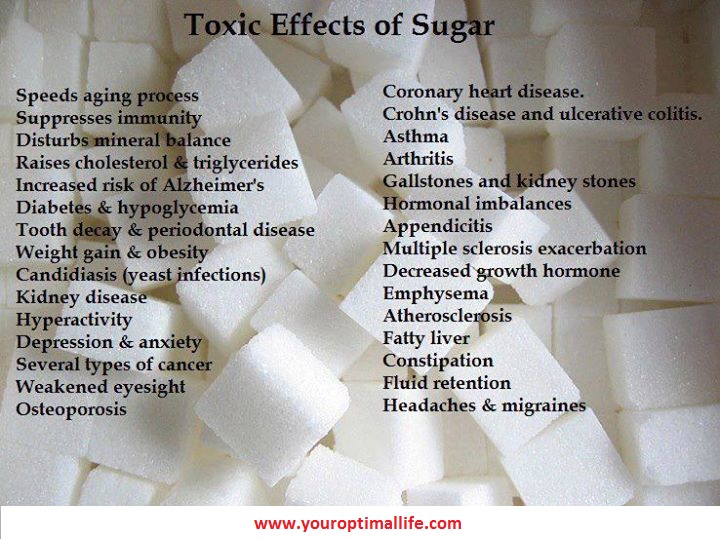
ToxicEffectsofSugar
Ever tried to cut back- or even eliminate- sugar? It’s not so easy.
Nature gave us a sweet tooth for a reason- and it wasn’t just to frustrate our diet efforts!
We humans – unlike other animals- don’t make our own vitamin C. Vitamin C is most abundant in fruits. So nature gave us taste buds that would make these relatively sweet tasting foods desirable.
Unfortunately the whole system has become deregulated since just about everything you buy now has sugar in it, and there’s a huge disconnect between the purpose of our original wiring- to make sure we got enough vitamin C- and the way that wiring is used today (to make sure we get enough Krispy Kreme donuts!)
Giving up- or cutting back- on sugar is no picnic. But the rewards are tremendous. Eliminating (or even reducing) sugar can benefit your health in more ways than you can imagine.
Here’s a list of my Top Ten Ways to Start Reducing Sugar……..
  1. Don’t add it to foods. This is the easiest and most basic way to immediately reduce the amount of sugar you’re eating. Biggest targets: cereal, coffee and tea.
  2. Don’t be fooled by “healthy sugar” disguises. Brown sugar, turbinado sugar, raw sugar … it’s all pretty much the same thing as far as your body is concerned.
  3. Make a real effort to reduce or eliminate processed carbohydrates.Most processed carbs — breads, bagels, most pastas and snacks — are loaded with flour and other ingredients that convert to sugar in the body almost as fast as pure glucose. That sugar gets stored as triglycerides, which is a fancy way of saying fat.
  4. Watch out for “fat-free” snacks. One of the biggest myths is that if a food is fat-free it doesn’t make you fat. Fat-free doesn’t mean calorie-free, and most fat-free snacks are loaded with sugar.
  5. Shop for color. The more your grocery basket looks like a cornucopia of color, the better. It usually means you’re getting more fresh vegetables and low-glycemic fruits such as berries and cherries.
  6. Become a food detective. This tip is from the wonderful author and nutritionist Anne Louise Gittleman, who adds, “To reduce sugar, you have to know where it is first.” Start reading labels.
  7. Beware of artificial sweeteners. Unfortunately, they can increase cravings for sugar and carbohydrates. They can also deplete the body’s stores of chromium, a nutrient crucial for blood-sugar metabolism.
  8. Do the math. Look at the label where it says “total sugars” and divide the number of grams by four. That’s the number of teaspoons of sugar you are ingesting. This exercise alone should scare the pants off you.
  9. Limit fruit. (Notice I didn’t say “eliminate.”) Fruit has sugar, but it also has fiber and good nutrients. Just don’t overdo it. For weight-loss purposes, keep it to two servings a day and try to make most of them low-glycemic (grapefruit, apples, berries)
  10. Eliminate fruit juice. It’s a pure sugar hit with none of the fiber and less of the nutrients that are found in the fruit itself.
                                                                                                        ~Thanks to Ronny Abraham, MD

Monday, November 10, 2014

Protein Deficiency Risks

If your are not eating enough protein, you are not only missing out on the health benefits but may be doing some damage to your overall health. What are some of the affects a lack of protein can have and the main five risks of protein deficiency?
protein deficiency
1. Retaining Fluid
Having enough protein can help balance the fluid in your body. Not taking in enough protein can interfere with keeping this fluid balance and lead to fluid retention. Retaining fluid can lead to the swelling of your stomach, feet and hands and can also lead to discolored skin, stiff joints, high blood pressure and pain.
2. Lack Of Muscle growth
It is well known that one of the main functions of protein is to maintain, repair and build the cells in your body. Having a protein deficiency can stunt the growth of muscle cells as these cells are are one of the main users of protein. With a lack of protein, even after 24 hours, your body begins to break down muscle cells in search of protein, causing muscle waste and shrinkage.
3. Mental Health Issues
Your brain also has requires protein to function at an optimal level. Without sufficient protein, your brain struggles to develop properly. This can lead to such issues as mood swings, anxiety and depression.
4. Possible Organ Failure
Protein plays an important part in the maintenance and repair of all of your body's vital organs. If you do not have enough protein, all your vital organs will not have what they need to stay healthy and function properly. In the short term, this results in organs not functioning at optimum level and possible organ failure in the long term.
5. Immune System Weakness
Protein is used by your immune system to create antibodies. The importance of these antibodies is to strengthen your body's immune system, and to fight disease, infections and viruses.
If you are lacking protein in your diet, your body will not have what is required to make these antibodies. The lack of these antibodies will have a negative effect on your immune system and make you vulnerable to infections, viruses, and diseases.


Summary
Protein deficiency can lead to some serious health problems. It is crucial that your diet contains plenty of protein-rich foods (such as meat, nuts, and fish) and to make it a point to enjoy the health boosting properties of protein.


~Thanks to Mike Medeiros


Sunday, November 9, 2014

The Most Important Healthy Beauty Swap You Can Make


Healthy changes often come as a result of major dedication and discipline—like dawn workouts and ordering kale salad instead of wings & lager. But small, yet powerful changes can boost your wellness as much as big sacrifices can. 
When it comes to staying beautiful, you can do all the right things: use a great cleanser, exfoliate, moisturize. But the beauty cognoscenti say many of us get at least one of those “right” things - well - wrong. And as a result, we’re contributing to our own lack of that healthy glow.
Swap your moisturizers and lotions for a facial oil (think squalane, camellia, argan, coconutpumpkin seed, or blends with jojoba, chamomile, rosehip seed, sea buckthorn, and marula, just to name a few).
Oils provide direct nourishment, make skin more luminous, and help protect skin from a range of freakouts. And they do it sans additives like water, preservatives, and emulsifiers.
If you apply them correctly, of course.
The time to apply oils is as soon as you wash your face or jump out of the shower—you’re not necessarily dripping, but definitely still damp. (You can always mist your face first, too.)
Applying to damp skin is something a lot of us have heard, but we’re still not doing, and it makes a huge difference in boosting your radiance. When there are some beads of water on your skin, apply the oil directly. Done right, it’ll soak into the skin in a minute, not sit on top of it.
You might find you don’t need a moisturizer, except in the more brutal months. During winter, consider the layer method: Apply a few drops of oil first, then a moisturizer, cream, or balm, which can help keep cold (read: harsh) fall and winter air at bay. Of course, if you love your moisturizer—face or body—it’s totally fine to keep using it. It just might not be the beauty workhorse you think it is.If your skin is on the oily or acne-prone side, and you’re skeptical about putting oils anywhere near your face, take note: Plant oils can actually help bring your skin into balance. Use an oil blend higher in linoleic acid, such as rosehip or evening primrose, if your skin type is on the oily side. For dry skin, use oils higher in oleic acid, such as sea buckthorn, squalane or avocado oil.
Oils are great because you’re skipping all the waxy emulsifiers and preservatives that are needed to make an oil into a water-based cream, and really getting the essential skin-care ingredients in their core form.
~Thanks to Spirit Demerson

Wednesday, November 5, 2014

This Is Your Teenager's Brain on Soda


A growing number of doctors and public health experts now see sugar as one of the main culprits behind both widening waistlines and chronic health problems like heart disease and diabetes. But scientists are only just discovering how the sweet substance affects the brain—especially the developing brain. As you might guess, sugar isn't exactly making young people sharper. In fact, researchers at the University of Southern California recently published a study showing a connection between sugar consumption and memory problems.
For the USC study, scientists gave adolescent rats sugar-sweetened drinks that contained either sugar or high-fructose corn syrup in "concentrations comparable to popular sugar-sweetened beverages." They observed the animals' ability to navigate through mazes compared to a control group of rats given plain water. The adolescent rats on sugar "were impaired in learning and remembering the task," says Scott Kanoski, the corresponding author of the study and an assistant professor of biological sciences at USC-Dornsife.
The researchers also found evidence of swelling in the part of the brain called the hippocampus. The swelling appeared in the adolescent rodents who consumed both sugary solutions, although the results were more pronounced for the rats given high-fructose corn syrup (usually the sweetener used in soda). Damage to this part of the brain is often found in people who suffer from Alzheimer's and other forms of dementia.
The results of a memory test conducted. "Effects of Sucrose and High Fructose Corn Syrup Consumption on Spatial Memory Function and Hippocampal Neuroinflammation in Adolescent Rats," Hsu et al.
Kanoski says they did not determine why sugar influences the brain this way, but stressed that there was a clear connection to how it could impact youth. "We know that not only with adolescents, but with all critical period of development, there seems to be a higher susceptibility to environmental influences on behavior and biological systems," he says.
The study came out of a long line of research, headed by Kanoski and others, looking at the negative effects of the Western diet. This diet is high in saturated fats and simple sugars, and rats raised on it don't turn out too well: "They gain weight, they have increased adiposity, impaired glucose tolerance," Kanoski has found. Maybe even more disturbingly, they have "impaired cognitive processes," he says. Since these animals have similar physiological and neurobiological systems as humans, they serve as a reflection of how this diet might be screwing with our health and memories, too.
More than a quarter of teens drink at least a soda a day, and close to a fifth drink two or more.
In Kanoski's study, adult rats were also fed sugary diets and had to go through the mazes, but they didn't suffer the same cognitive defects as adolescents high on sugar. Assuming the results would hold true for people, that means we're feeding the population whose brains are more vulnerable to sugar the most sugary beverages. According to a 2011 National Center for Health Statistics Data Brief, teens and young adults consume more sweetened drinks than any other age groups. A food marketing study published by the Federal Trade Commission in 2012 shows that spending on soda marketing to teens was "higher than any other food category for teen marketing." This publicity appears to be working. The Center for Science in the Public Interest reports that more than a quarter of teens drink at least a soda a day, and close to a fifth drink two or more.
There might still be hope, though. Kanoski's team is now looking into whether sugar's negative affects can be turned around. Although Kanoski says he doesn't have results on this yet, "there have been other studies showing that animals can recover from cognitive deficits." But until stronger evidence of this turnaround arrives, add soda to the list of things you only realize later in life you wish you hadn't indulged so much in as a teen.

Blog Archive